
Nisaya · Buyer’s Guide · 10 min read
How to Identify an Authentic Zapotec Rug: A Buyer’s Guide
What to look for—from the artisan and the place of origin to the wool, the pedal loom, the natural dyes, and the provenance behind the piece.
Last updated August 2026
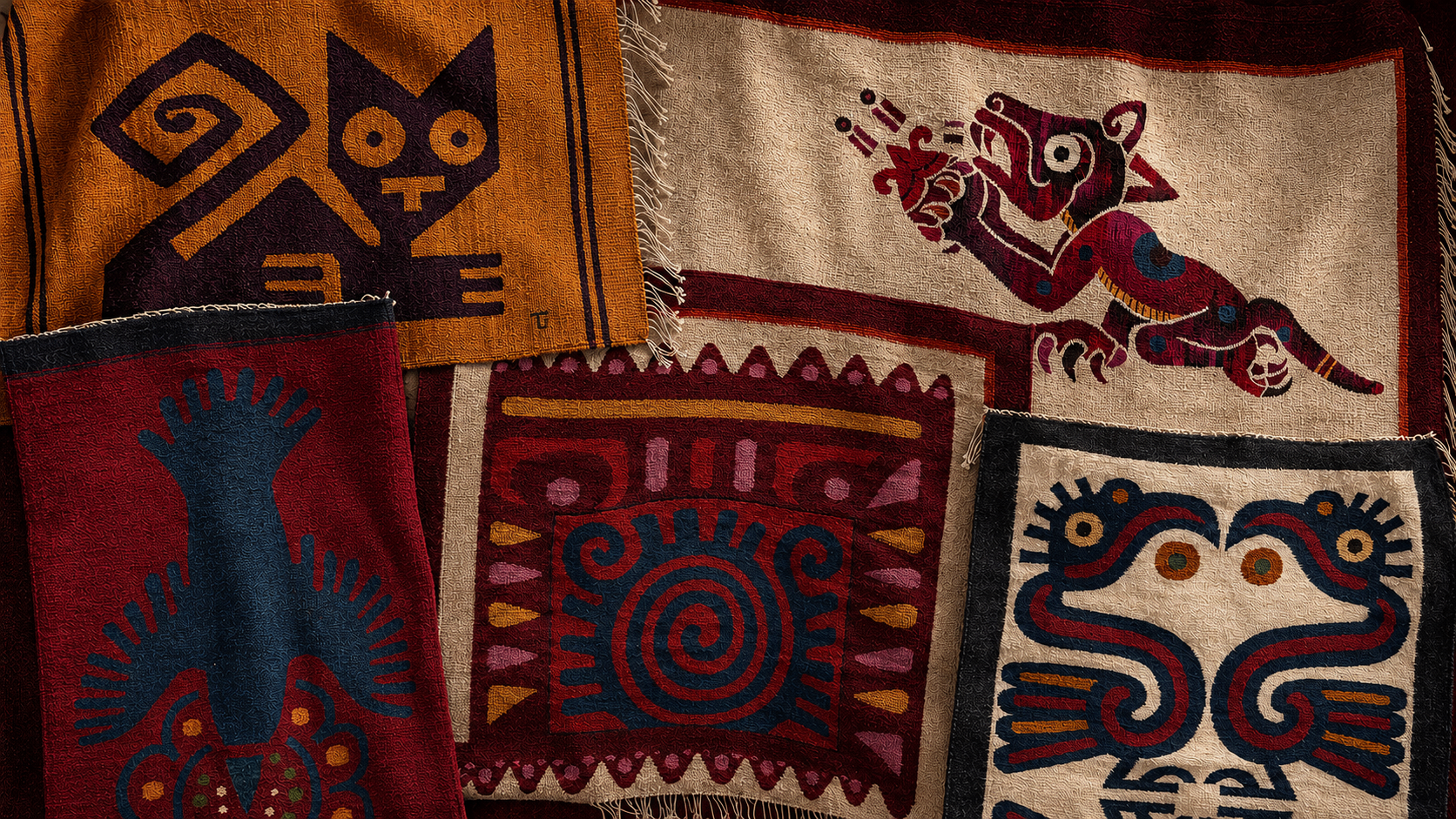
Zapotec rugs are among the most recognizable textiles in the world, and among the most imitated. As demand has grown, the market has filled with machine-woven pieces, acrylic blends, and chemically dyed copies sold under the same name. If you are buying your first Oaxacan textile, a short list of checks will tell you almost everything you need to know.
This guide walks through the seven things that separate an authentic, handwoven Zapotec rug from an imitation—starting with the person who made it.
1. Start with the maker
An authentic Zapotec rug always has a name attached to it. In Teotitlán del Valle, weaving is a family profession—designs, dye recipes, and loom technique pass from parents to children. A seller who cannot tell you who wove the piece is, at best, several steps removed from the workshop.
Every one of our one-of-one Zapotec rugs is attributed to its weaver. The tradition we work within was shaped by Isaac Vásquez García, who helped revive natural-dye practice in Oaxaca, and is carried forward today by the Vásquez family. For a fuller account of the village and its looms, see Oaxaca rugs from Teotitlán del Valle.
2. Confirm the place of origin
The heart of Zapotec weaving is Teotitlán del Valle, a village in the Tlacolula Valley about thirty minutes east of Oaxaca City. Rugs described vaguely as “Mexican” or “Southwestern” frequently come from factories elsewhere. Ask for the village, the workshop, and ideally photographs of the piece on the loom.
If you are traveling in Oaxaca, you can visit the workshop and watch the process from raw fleece to finished textile.

3. Test the wool
Authentic pieces are woven from hand-spun wool—historically churro, more often Mexican merino in contemporary workshops—that keeps its natural lanolin. Hand-spun yarn is never perfectly uniform: run your hand across the surface and you will feel gentle variation in thickness that gives the textile a living texture.
- Weight: real wool feels substantial; even a small rug has clear heft.
- Texture: slightly waxy from lanolin, never slick or plastic.
- Irregularity: tiny inconsistencies in the yarn are a signature of hand spinning.
- Smell: natural wool smells mildly earthy; acrylic smells of nothing or of chemicals.
Wool of this quality lasts generations when treated well. Our notes on how to care for a wool rug cover vacuuming, rotation, and spills.
4. Understand the loom
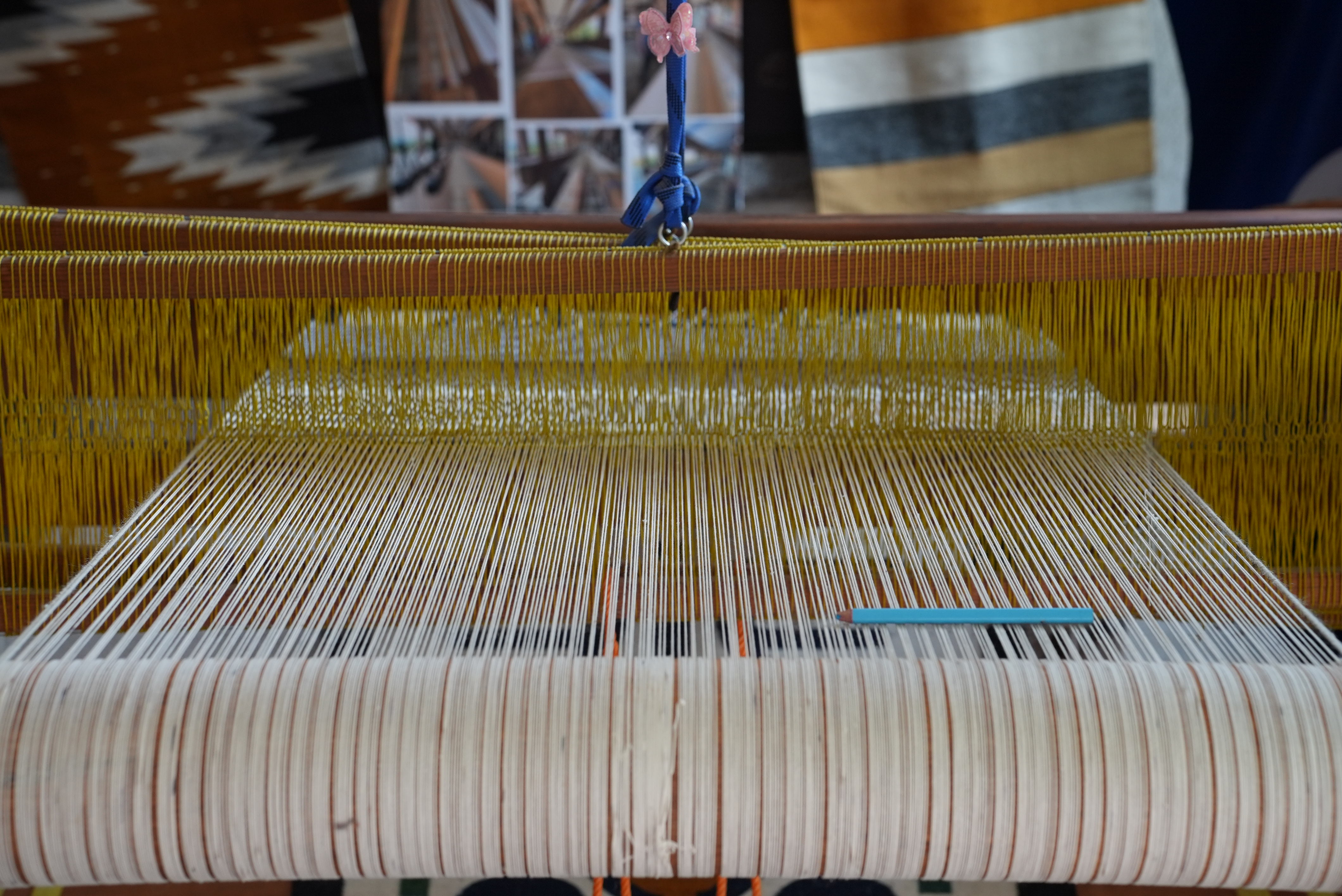
Turn the rug over. A handwoven Zapotec piece shows weft threads running horizontally across the back with slight variation in tension and spacing, and the selvedges are hand-finished rather than machine-serged. Machine-made rugs reveal a uniform canvas backing, a stiff grid of knots, or a glued fringe.
Teotitlán weavers still work the treadle loom introduced in the sixteenth century. The structure is warp-and-weft, not the tied pile of Oriental rugs, so the design reads clearly from both sides and the finished piece lies flat and dense.
5. Read the dyes
Color is often the fastest tell. Natural dyes come from plants, insects, and minerals: the famous cochineal insect for reds, pinks, and burgundies; fermented indigo for blues and purples; marigold and pericón for yellows; walnut and moss for browns and greens. Because they are made in small batches and applied by hand, the color is layered and slightly variable—two rugs of the same design will never match exactly.
Synthetic dyes read flat, neon, or unnaturally clean. If a rug is sold as handmade but the palette looks printed, ask the seller directly which dyestuffs were used and how they were fixed.
6. Study the design language
Zapotec weaving has its own vocabulary: stepped fretwork (grecas), diamonds, lightning, mountains, water, and animals such as deer, birds, serpents, and butterflies. These motifs are not decoration borrowed from a catalog—many carry pre-Hispanic meaning, and a skilled weaver can name each one and explain it.
- Grecas: stepped borders drawn from the stone mosaics of Mitla.
- Diamonds: the four directions, the earth, the eye of the gods.
- Deer and birds: Zapotec mythology, agriculture, and the spirit world.
- Serpents: water, fertility, and the underworld.
If you have a motif, palette, or dimension in mind that is not in our current collection, you can create a custom rug with the workshop.
7. Ask for provenance
Provenance is the documentation of who made the piece, where, from what, and when. A serious seller will list the weaver’s name, the workshop, the wool type, the dyes used, the exact dimensions, and photographs of the actual rug—not a stock image of a similar one.
Buying online removes your hands from the equation, so documentation matters more. Look for photos of both the front and the back, a clear return policy, and a seller who can answer technical questions without hesitation.
Authentic vs. imitation checklist
| Feature | Authentic Zapotec rug | Common imitation |
|---|---|---|
| Maker | Named weaver in a family workshop | Anonymous or unlisted |
| Origin | Teotitlán del Valle, Oaxaca | Unknown or mislabeled source |
| Fiber | Hand-spun wool, merino or churro | Acrylic, polyester, or blend |
| Loom | Wooden pedal loom, warp-and-weft | Power loom, canvas or glued backing |
| Dyes | Cochineal, indigo, marigold, walnut | Synthetic or chemical dyes |
| Color | Layered, earthy, slightly varied | Flat, neon, or perfectly uniform |
| Feel | Heavy, warm, faintly oily | Light, stiff, plastic-like |
| Provenance | Documented and often signed | No attribution |
Questions to ask before you buy
- Who wove this rug, and in which village?
- What wool is it, and was the yarn hand-spun?
- Which dyes were used, and how were they fixed?
- Was it woven on a pedal loom, and how long did it take?
- Is this piece one-of-one, or part of a production run?
- May I see photographs of the back and the selvedges?
Honest answers come quickly. Hesitation, vague geography, or a refusal to name the weaver are the clearest warning signs in the market.
A final rule for buying with confidence
If you remember one thing, remember this: an authentic Zapotec rug can always be traced back to a person. The wool, the loom, the dyes, and the motifs all matter—but they are downstream of the weaver. When a seller can name the maker, the village, and the materials without pausing, you are almost certainly looking at the real thing.
Frequently asked questions
- How can I tell if a Zapotec rug is authentic?
- Check the maker, the wool, the dyes, and the back of the rug. An authentic Zapotec rug is handwoven from hand-spun wool on a pedal loom in a family workshop, colored with natural dyes such as cochineal and indigo, and can be traced to a named weaver in Teotitlán del Valle.
- What is the difference between natural and synthetic dyes in Mexican rugs?
- Natural dyes derived from cochineal, indigo, marigold, and walnut produce layered, earthy colors with subtle variation between batches. Synthetic dyes look flat, neon, or unnaturally uniform, and may bleed or fade unevenly over time.
- Why are authentic Oaxacan rugs more expensive than machine-made copies?
- A single authentic Zapotec rug can take four to eight weeks of daily weaving, plus the time to wash, card, and hand-spin the wool and dye it in small batches over open fires. The price reflects real labor, natural materials, and one-of-one design.
- Are Zapotec rugs the same as Navajo or Oriental rugs?
- No. Zapotec rugs are flat-woven on a treadle loom in a warp-and-weft structure, so the design reads from both sides. Oriental rugs use a tied-pile technique, and Navajo weaving uses an upright loom with a different structure and vocabulary of motifs.
- How should I care for a handwoven wool rug?
- Vacuum without a beater bar, rotate the rug a few times a year to even out light exposure, blot spills immediately with cold water, and have it professionally cleaned only when necessary. Natural-dyed wool ages beautifully when it is not over-washed.