Handwoven wool rugs from Teotitlán del Valle, the village in the Tlacolula arm of the Oaxaca valley where rug weaving has been the main trade for generations. Each piece here is finished, photographed and shipped from the family workshop.
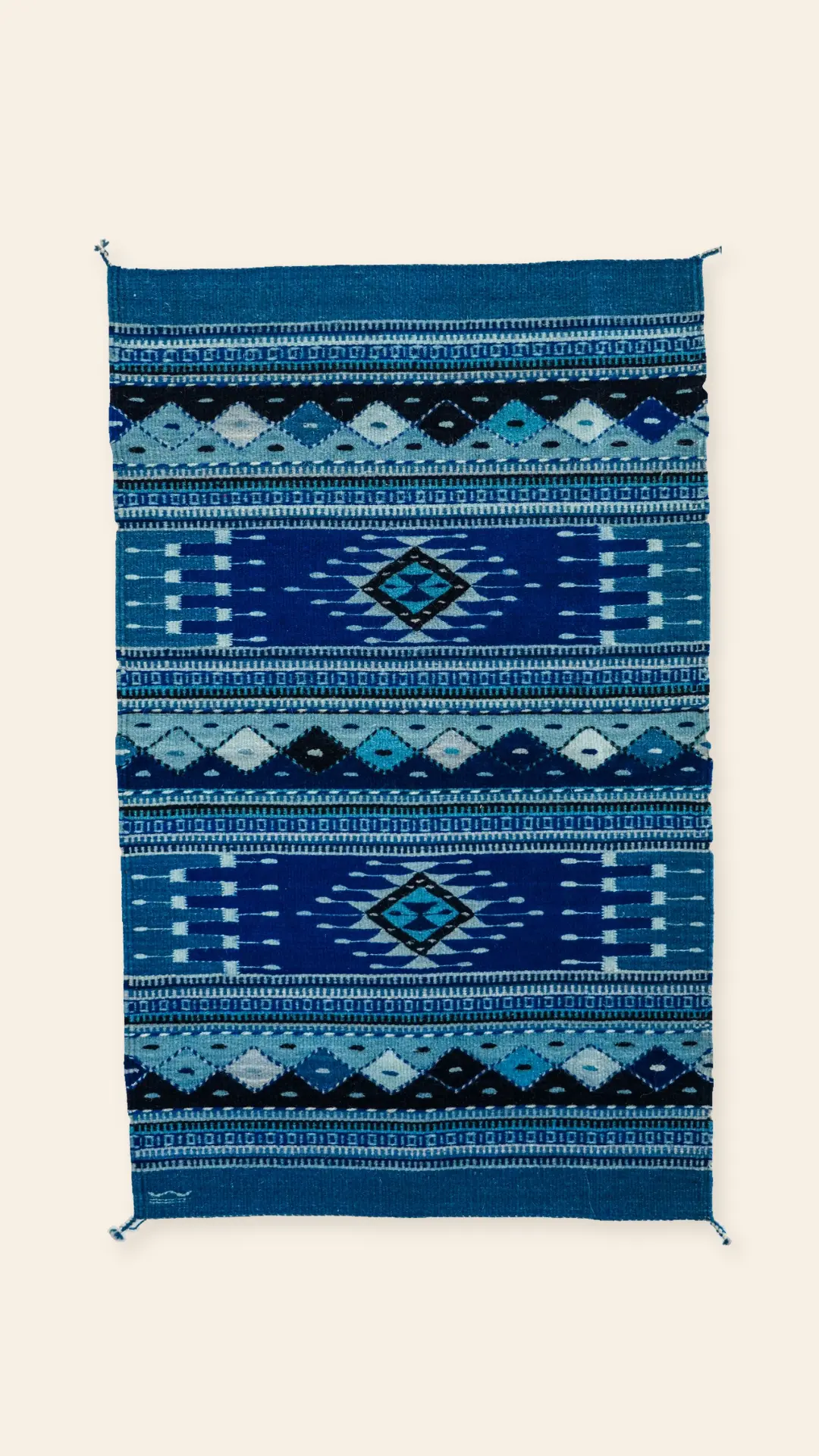
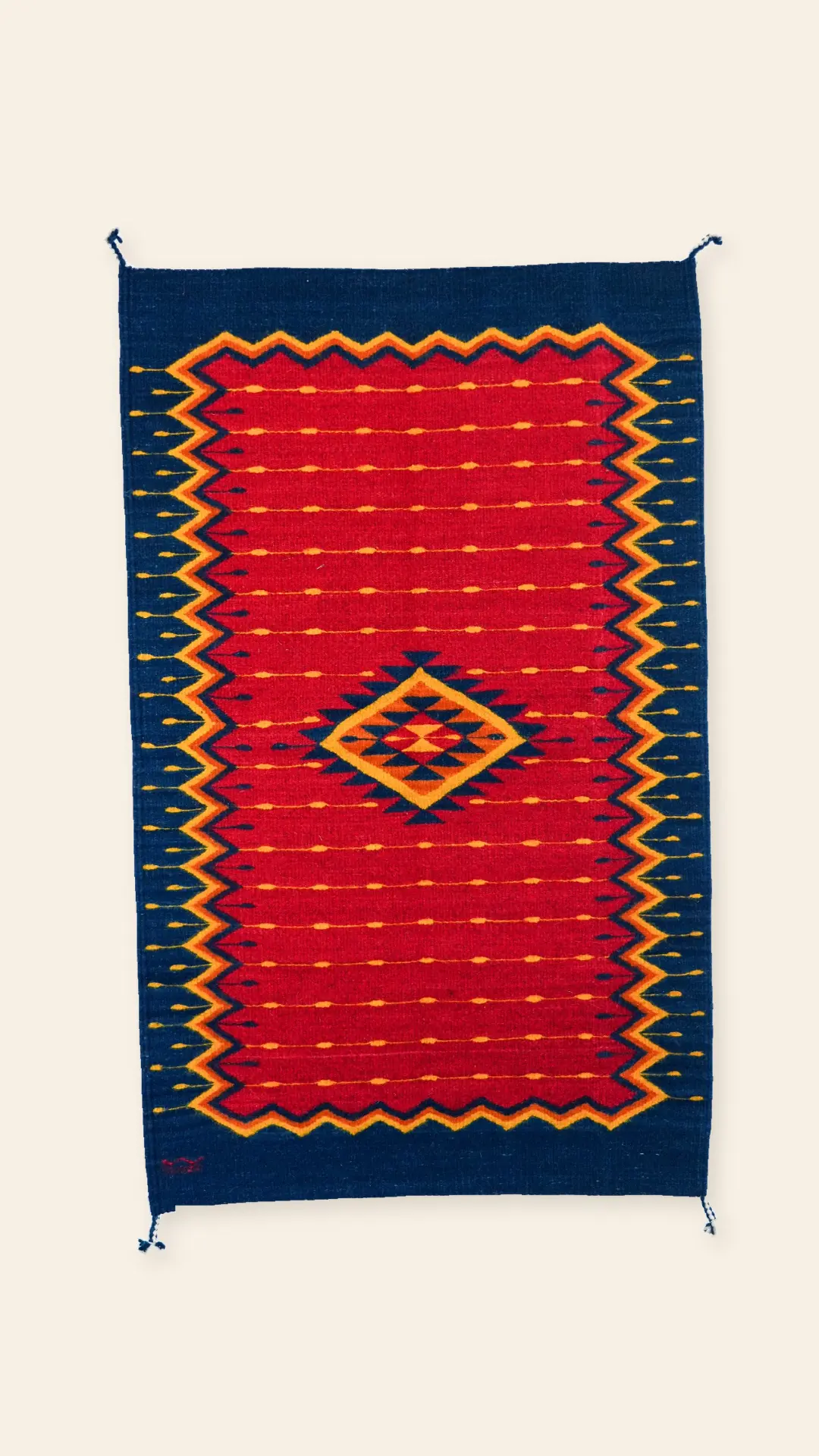
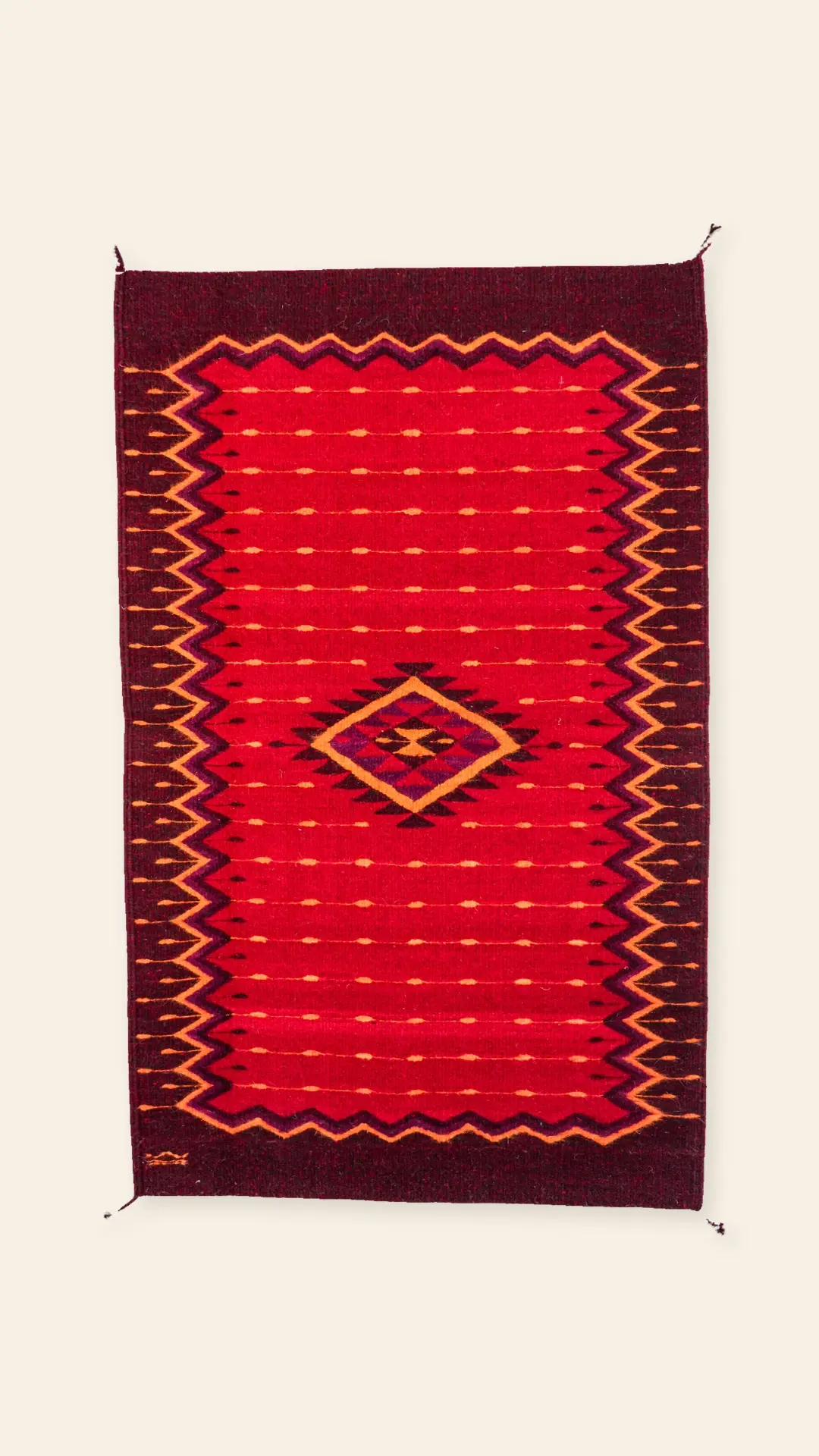
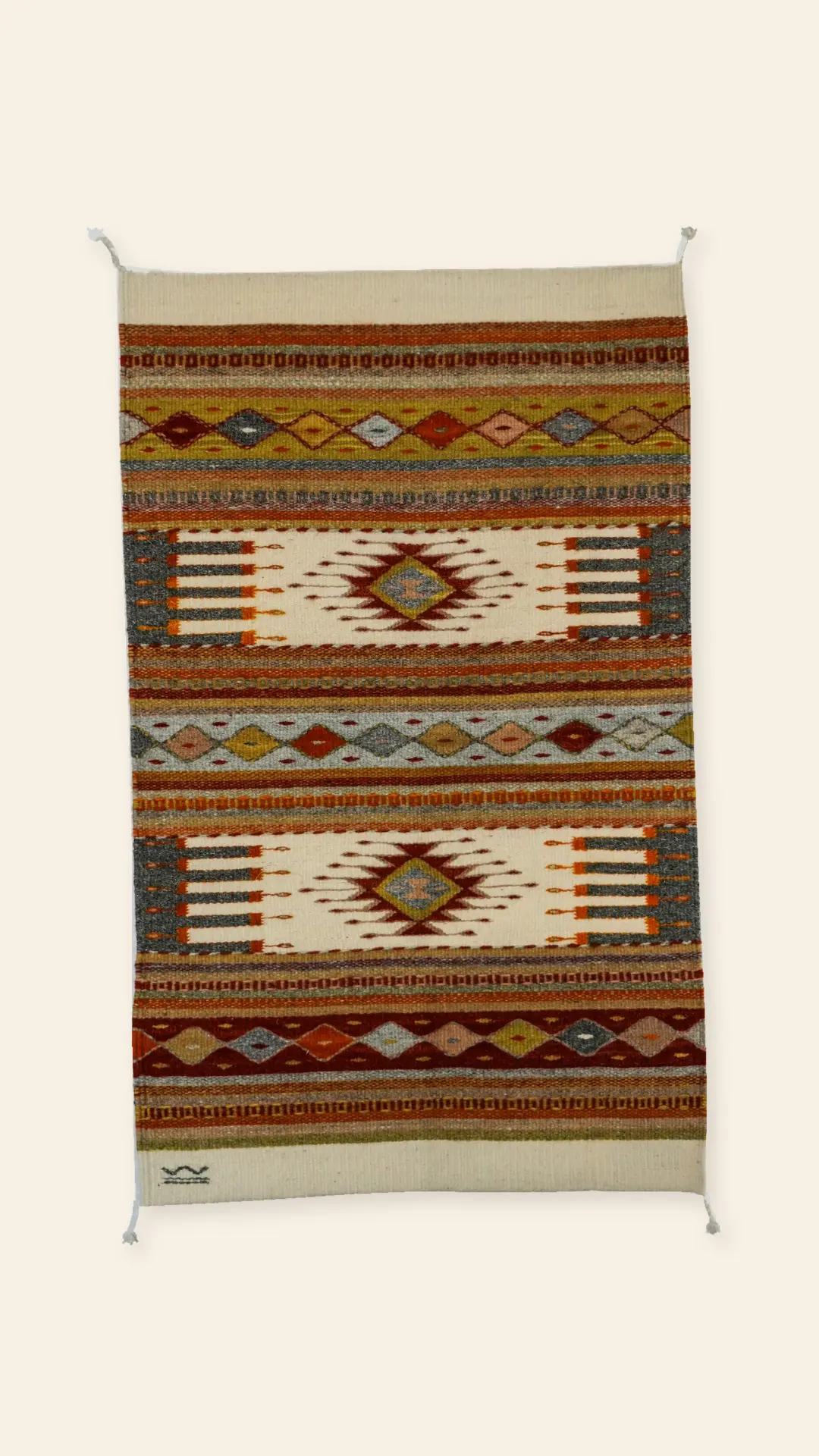
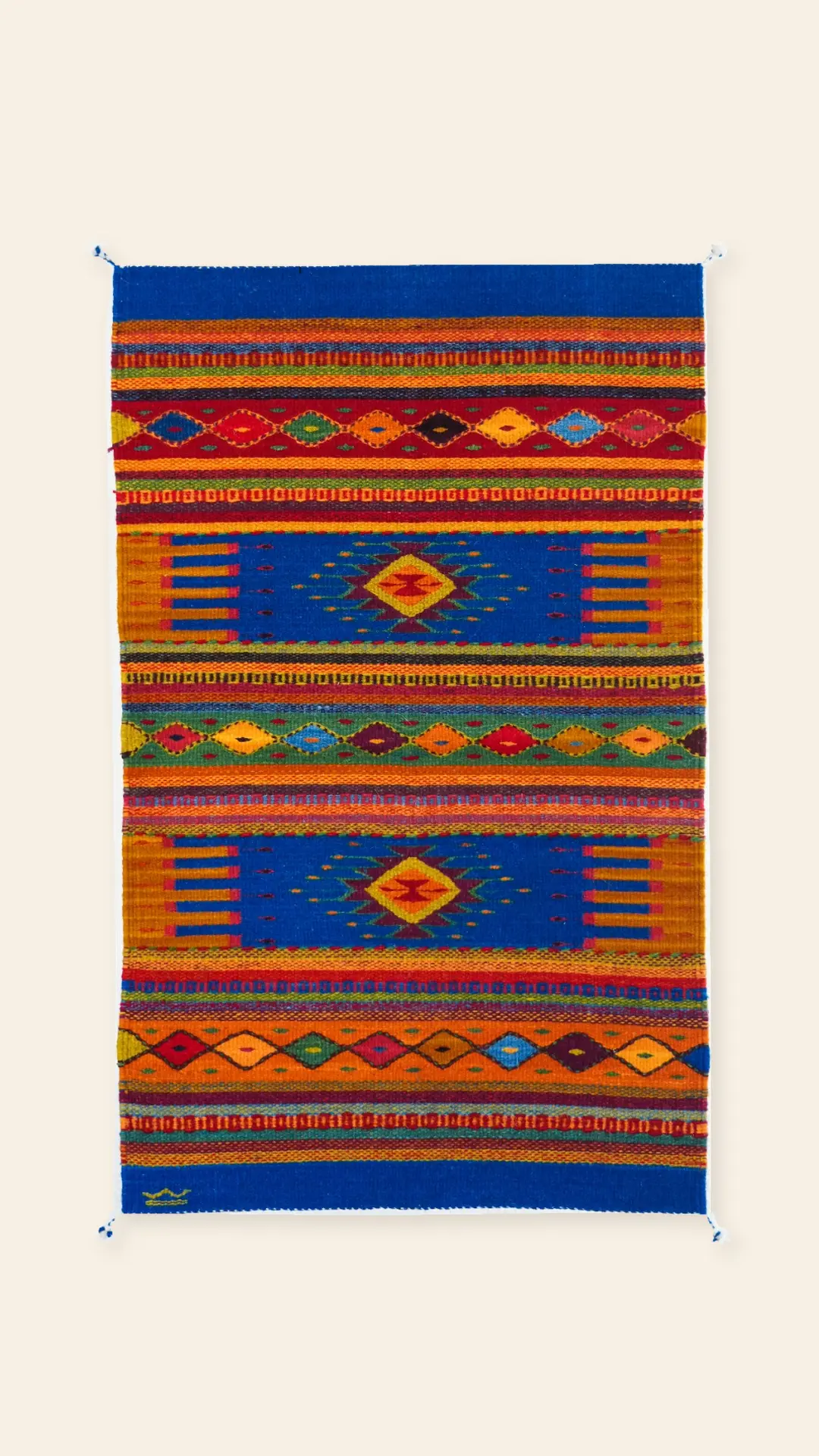
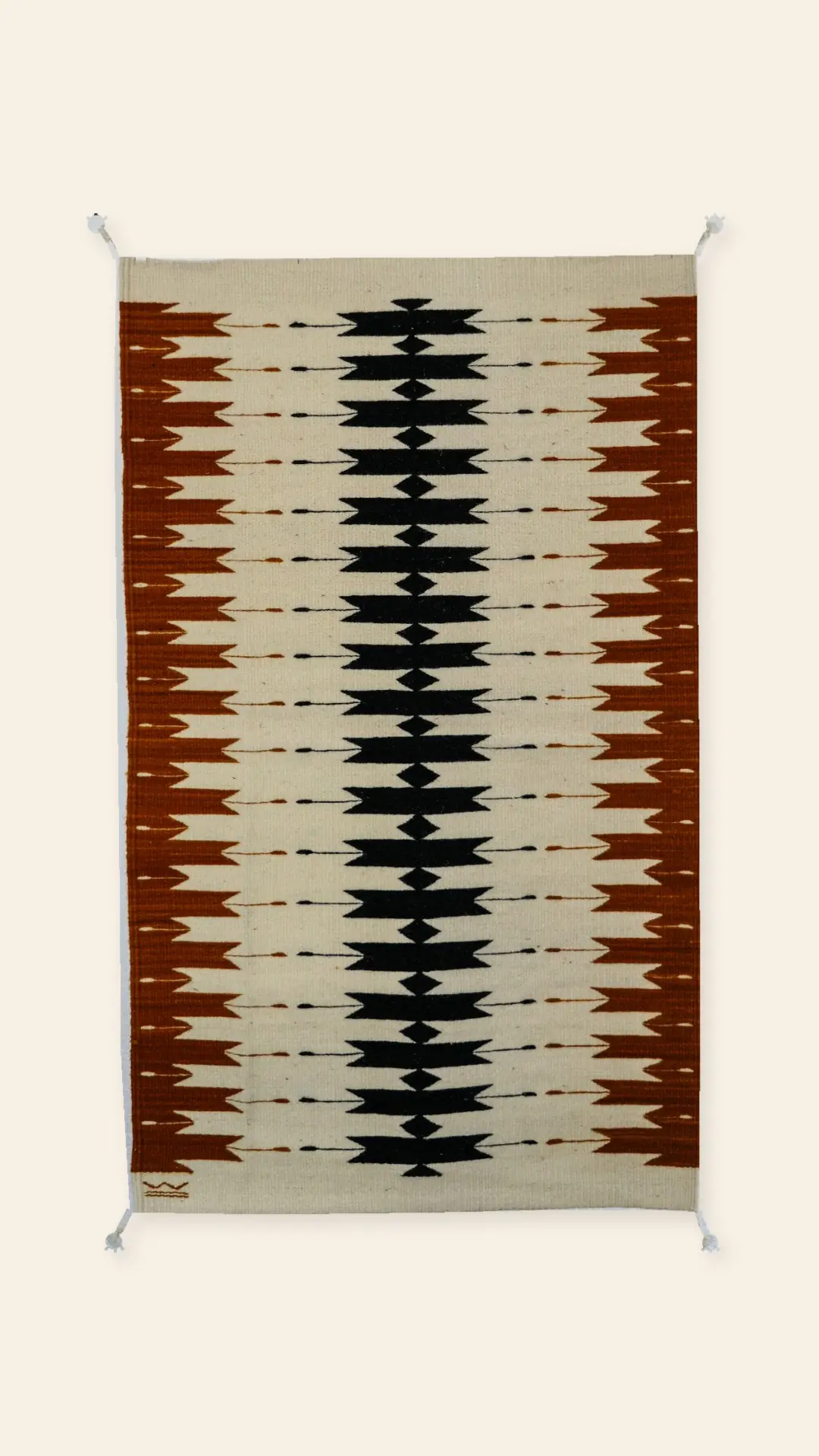
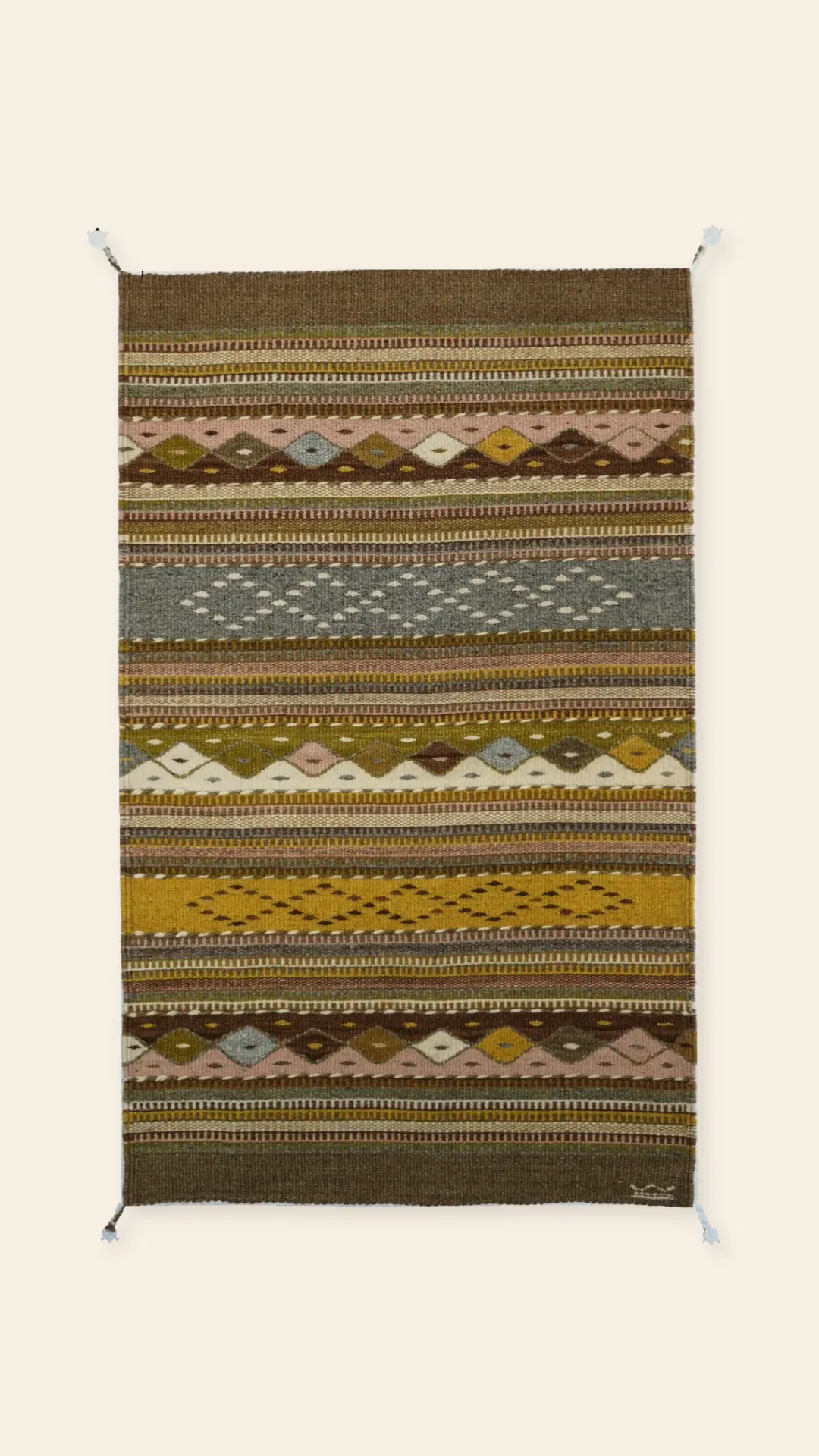
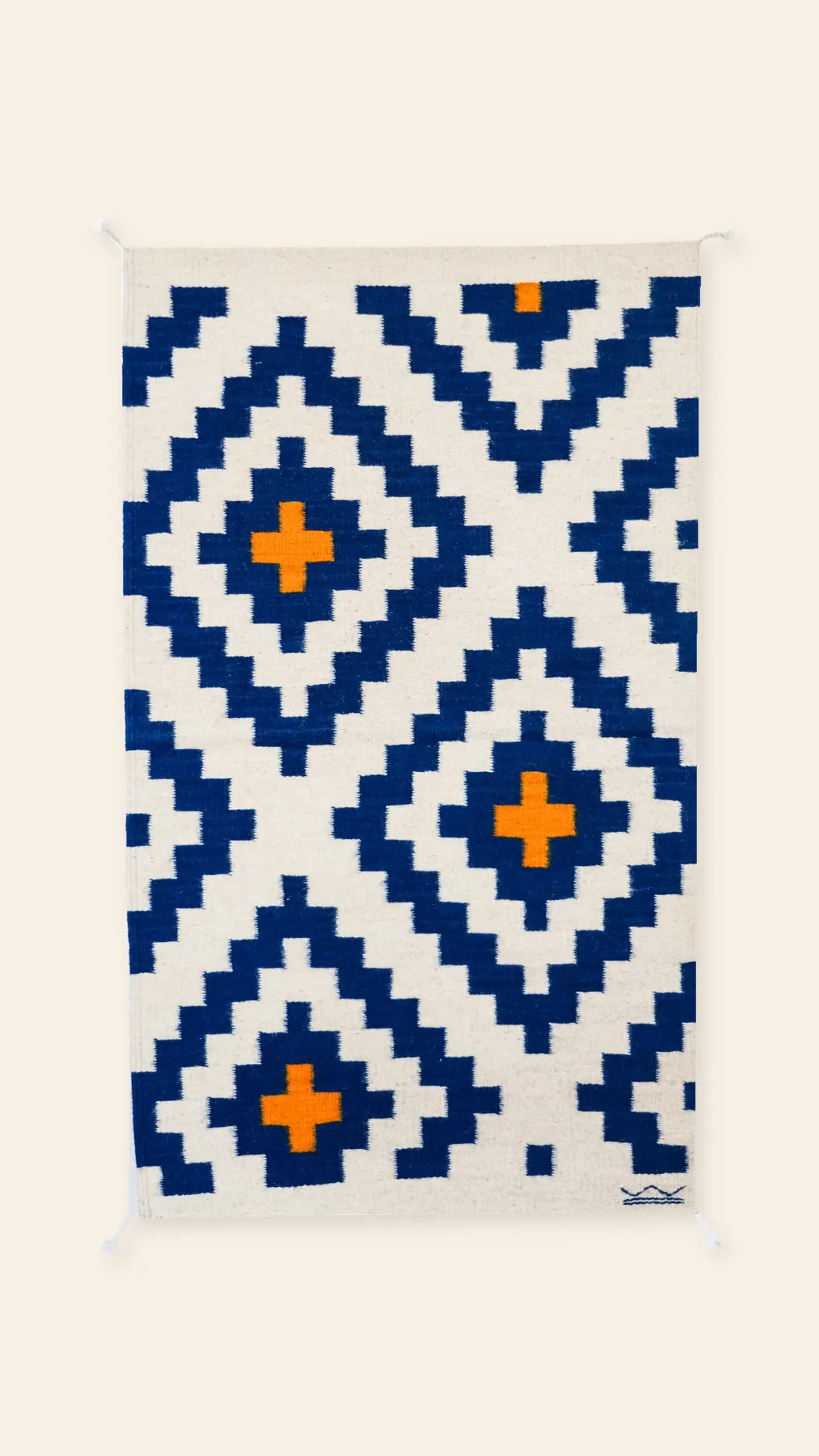
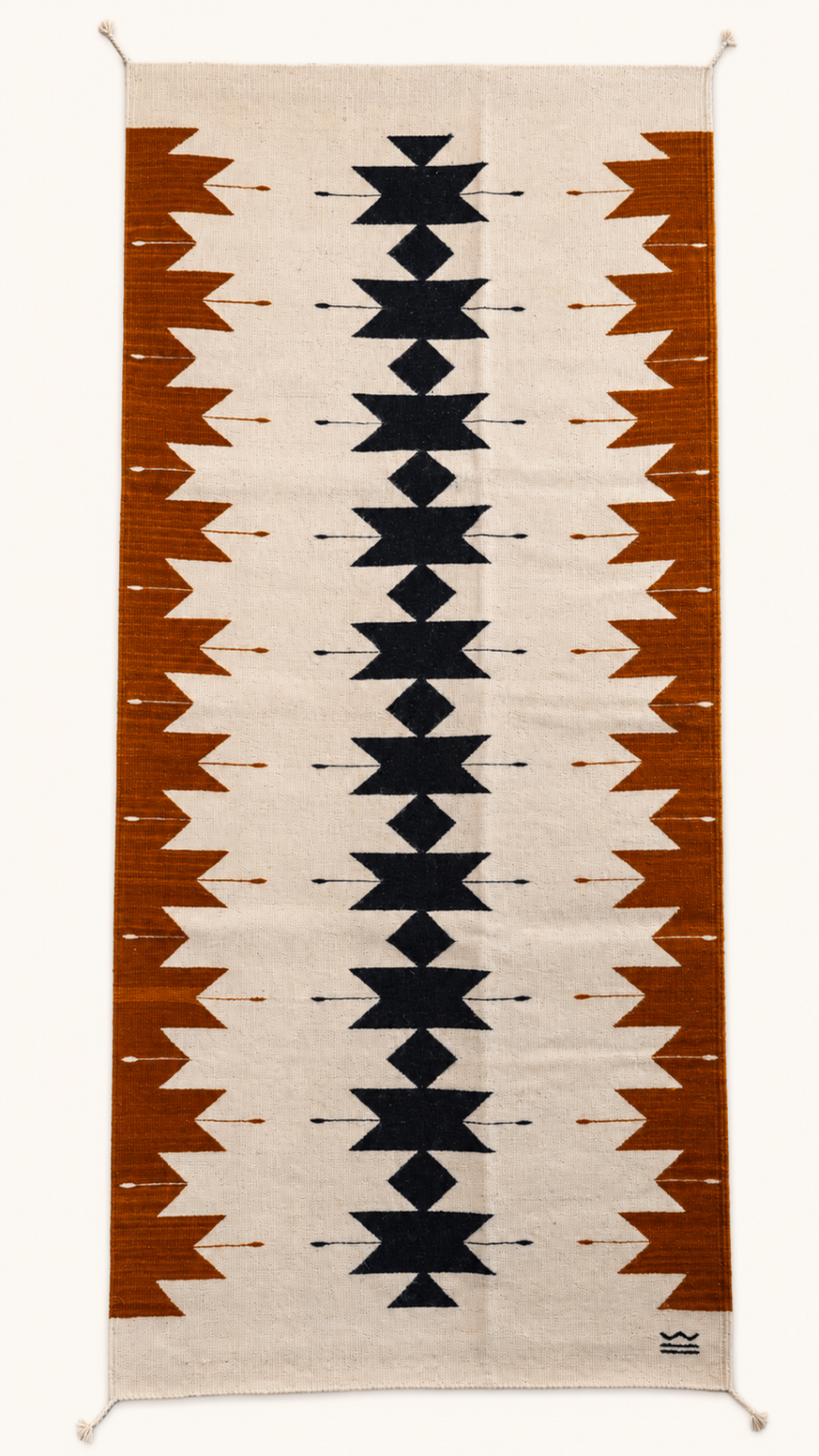
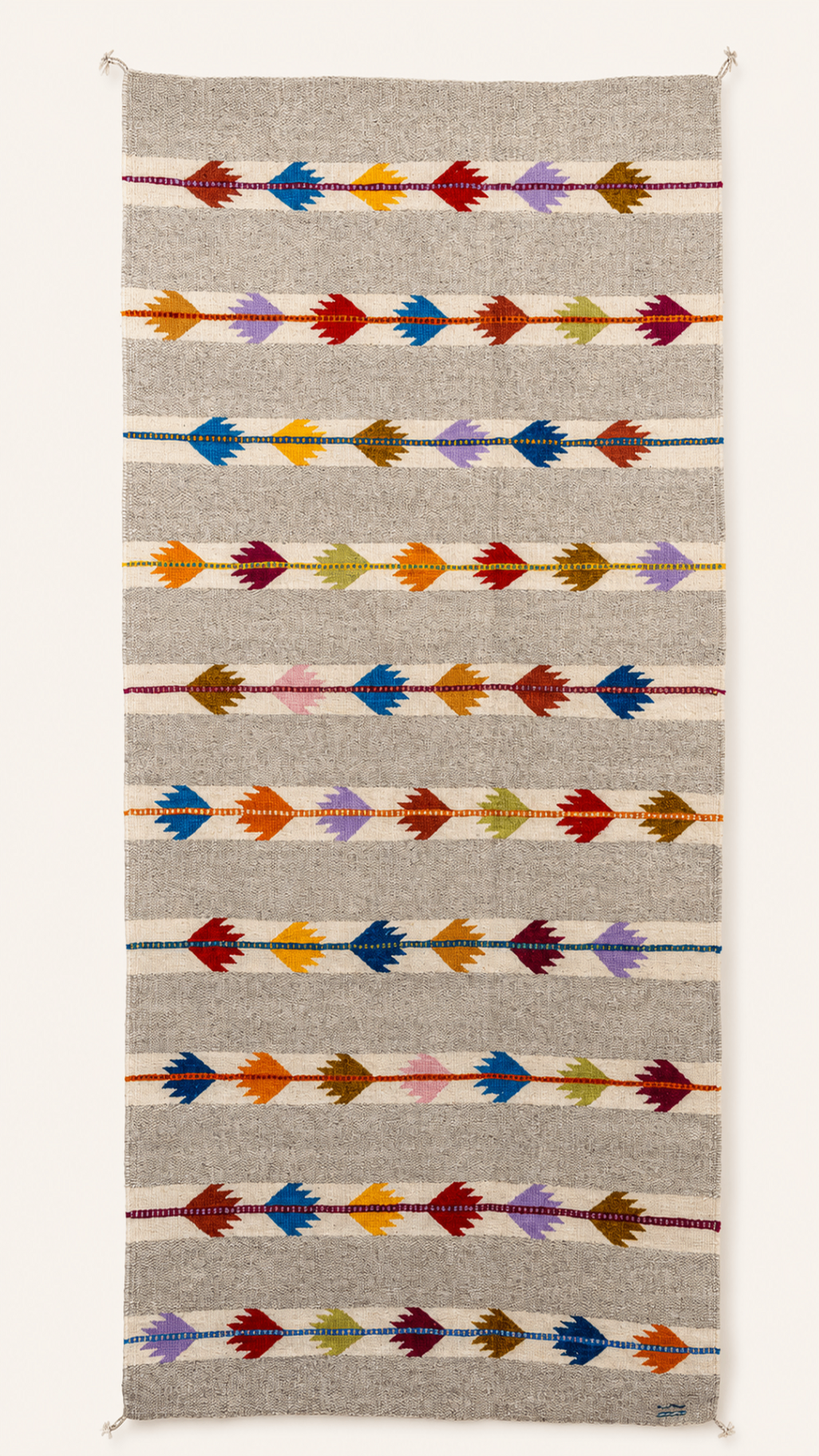
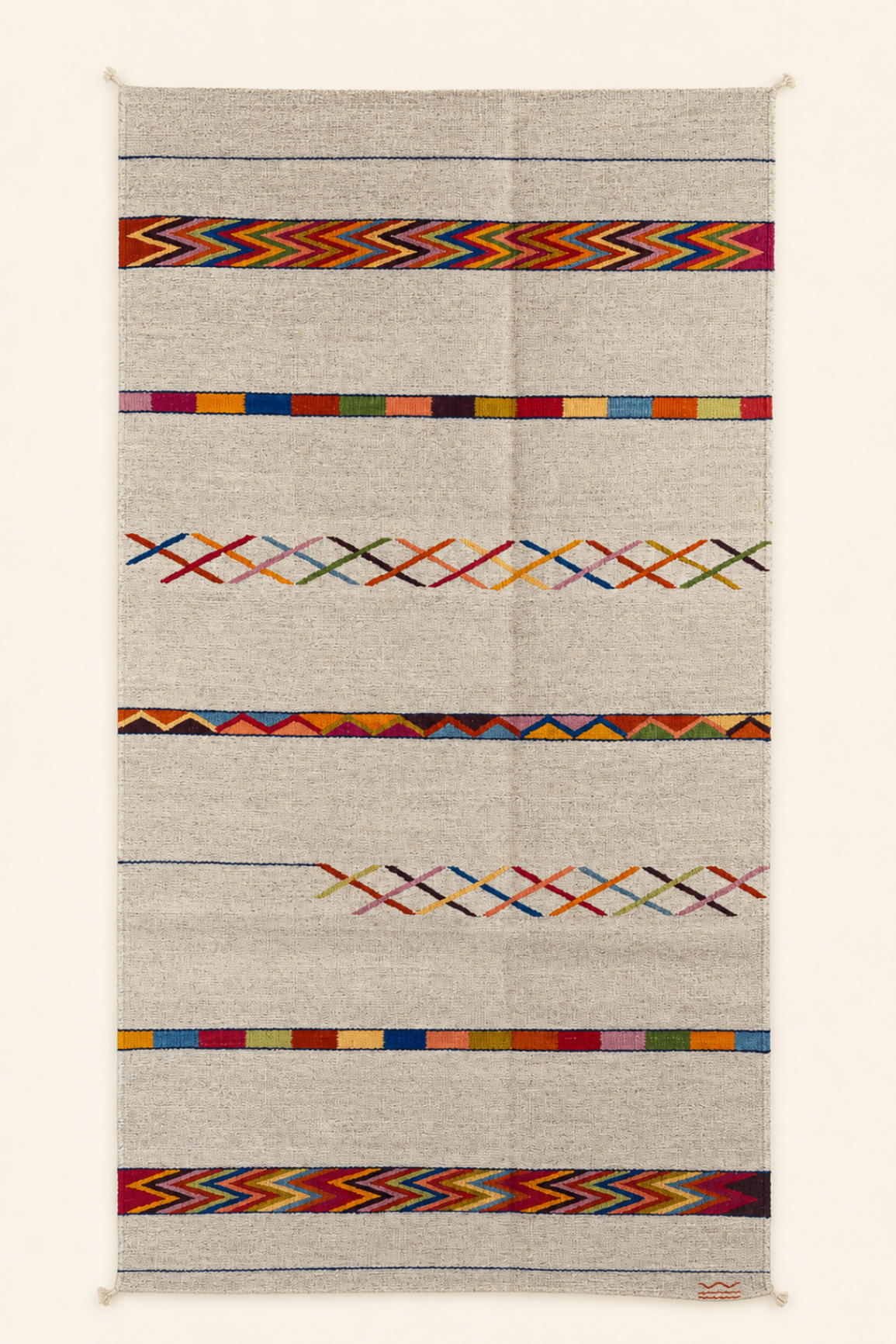
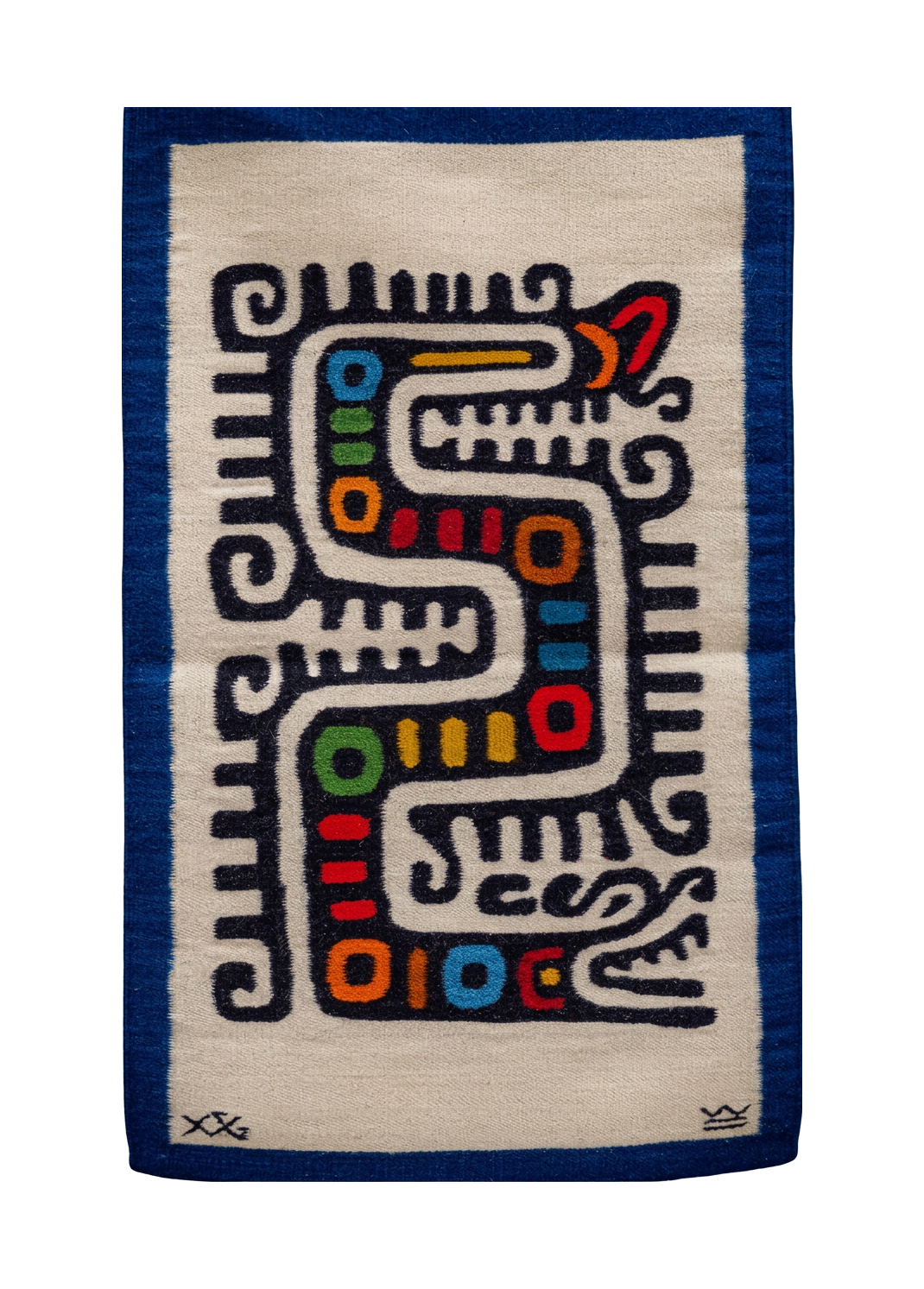
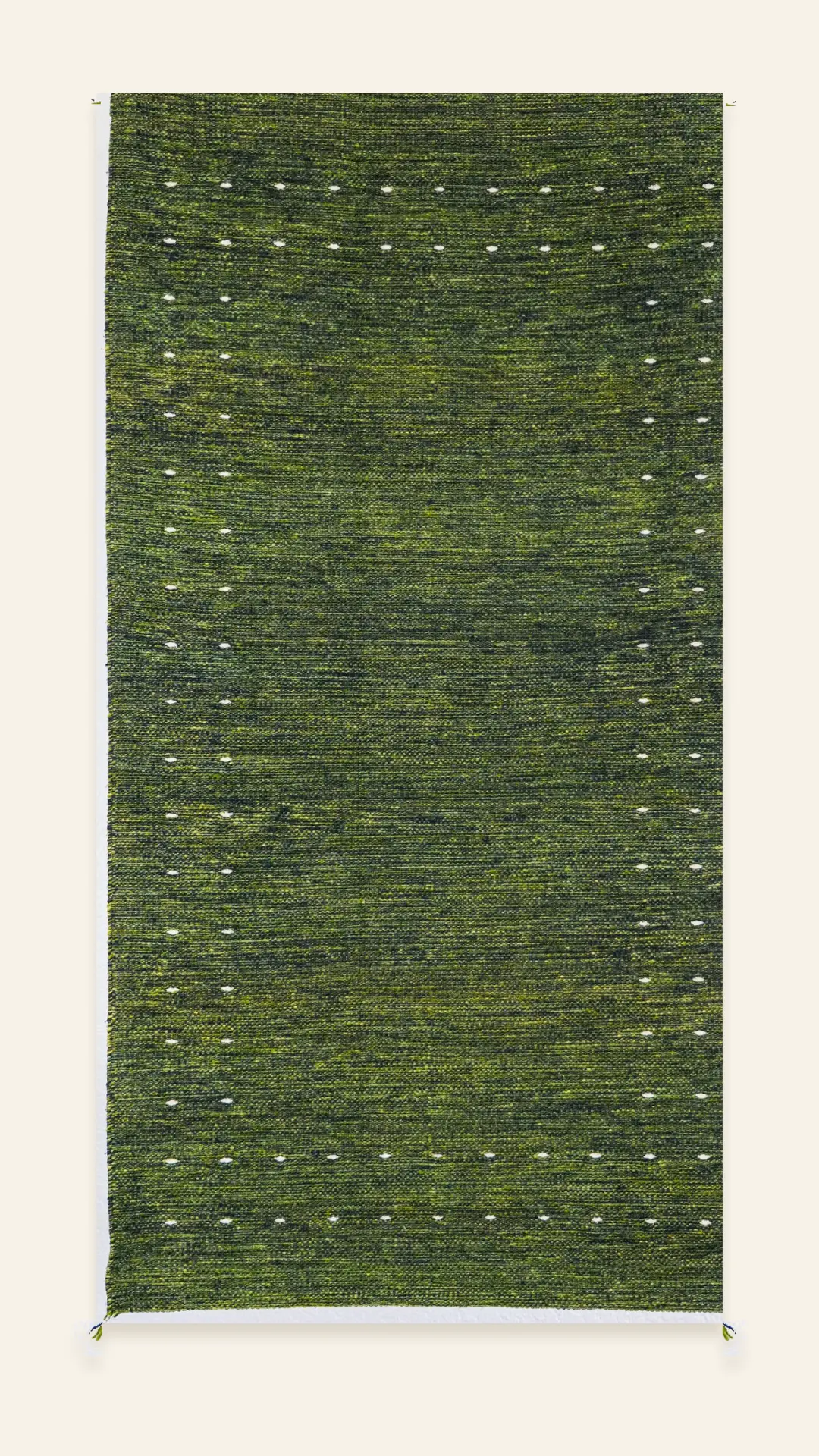
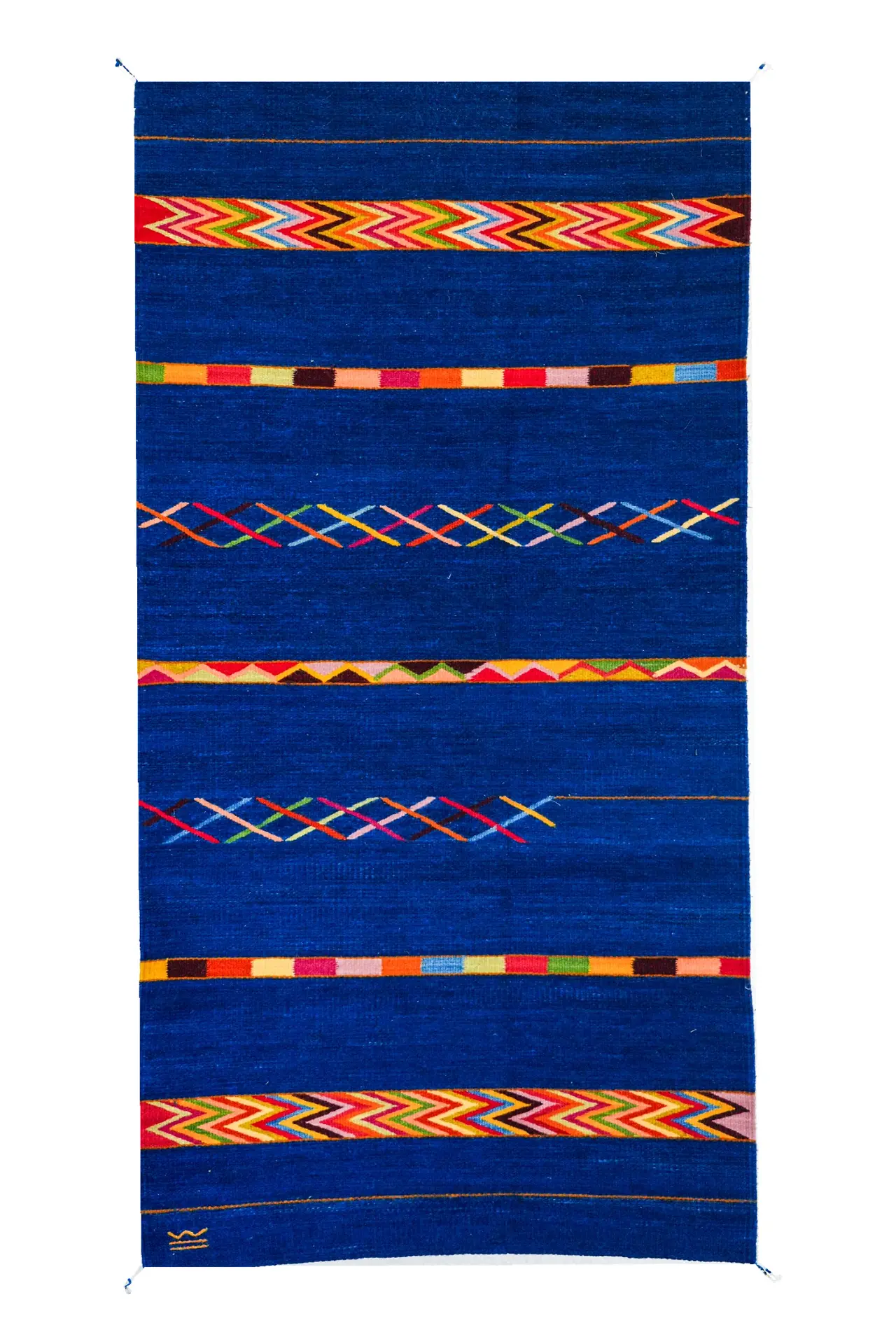
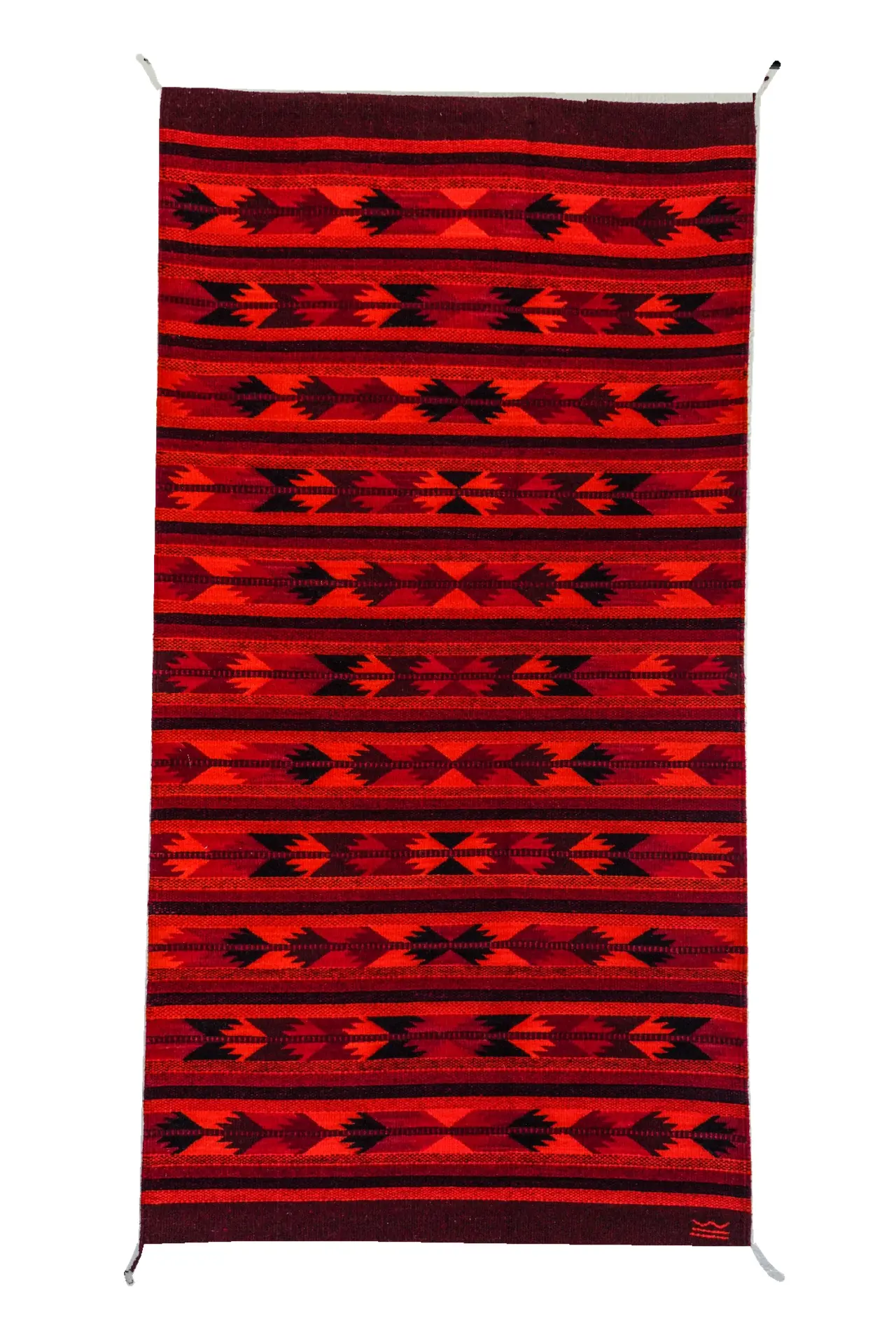
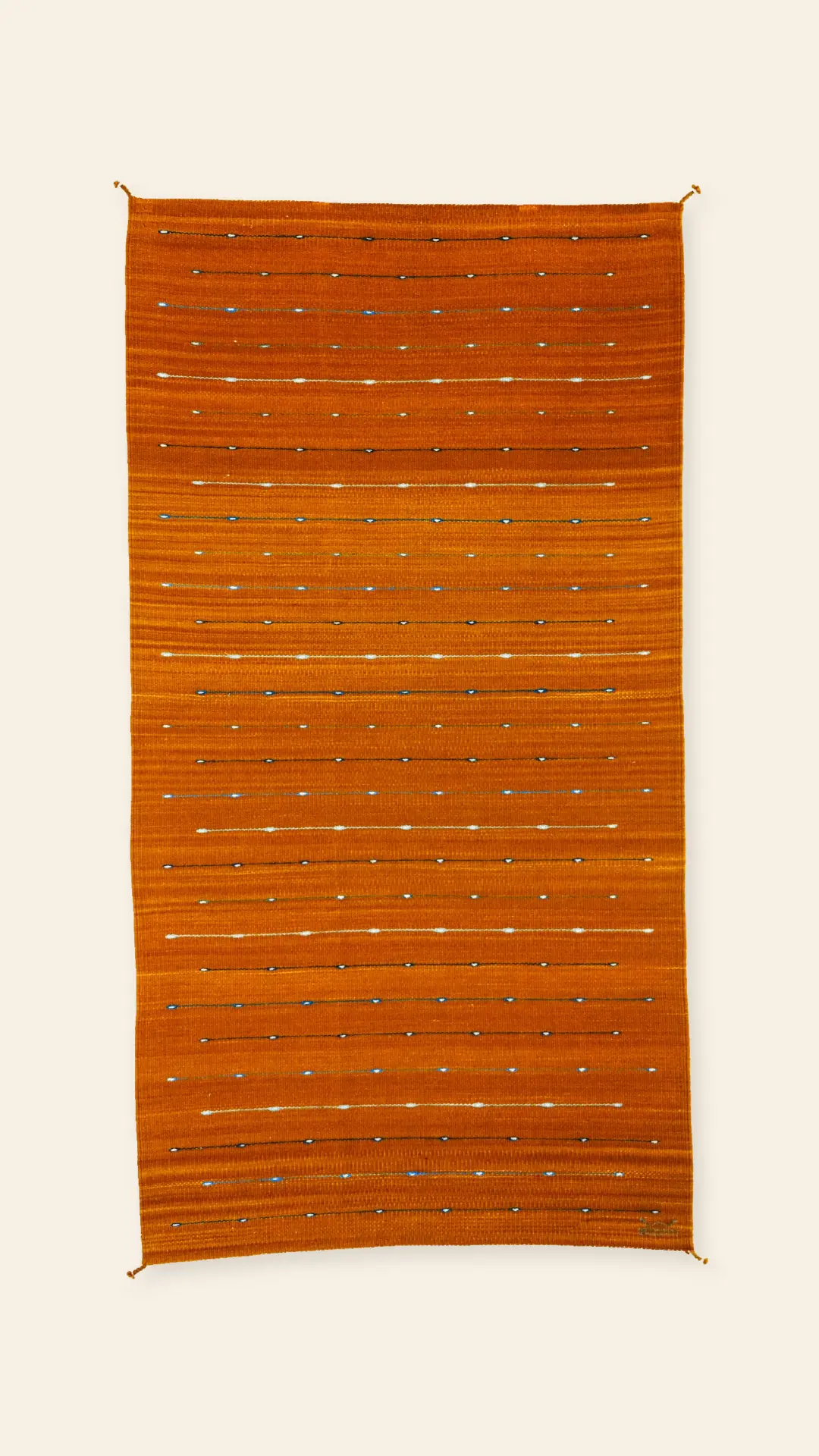
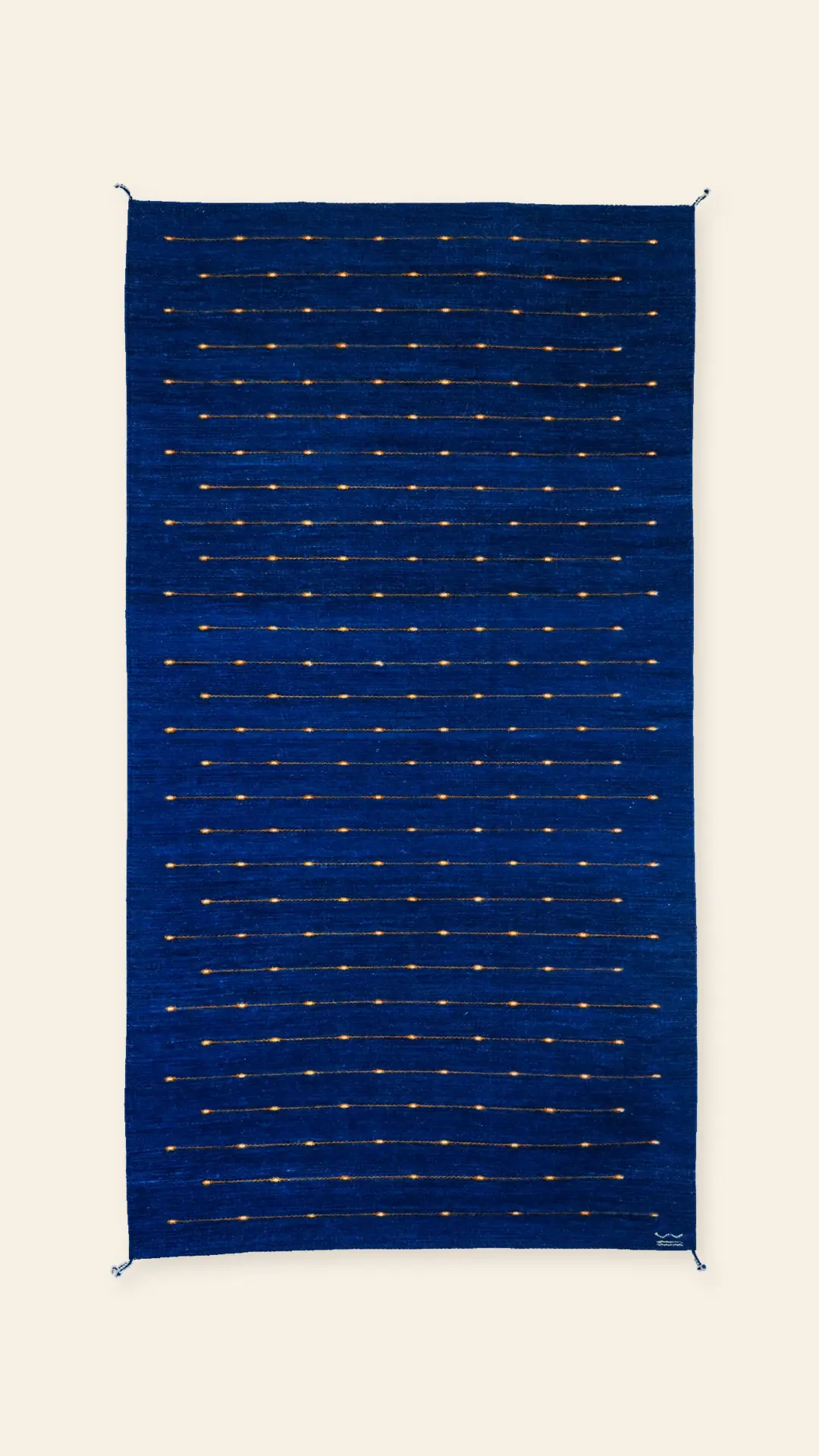
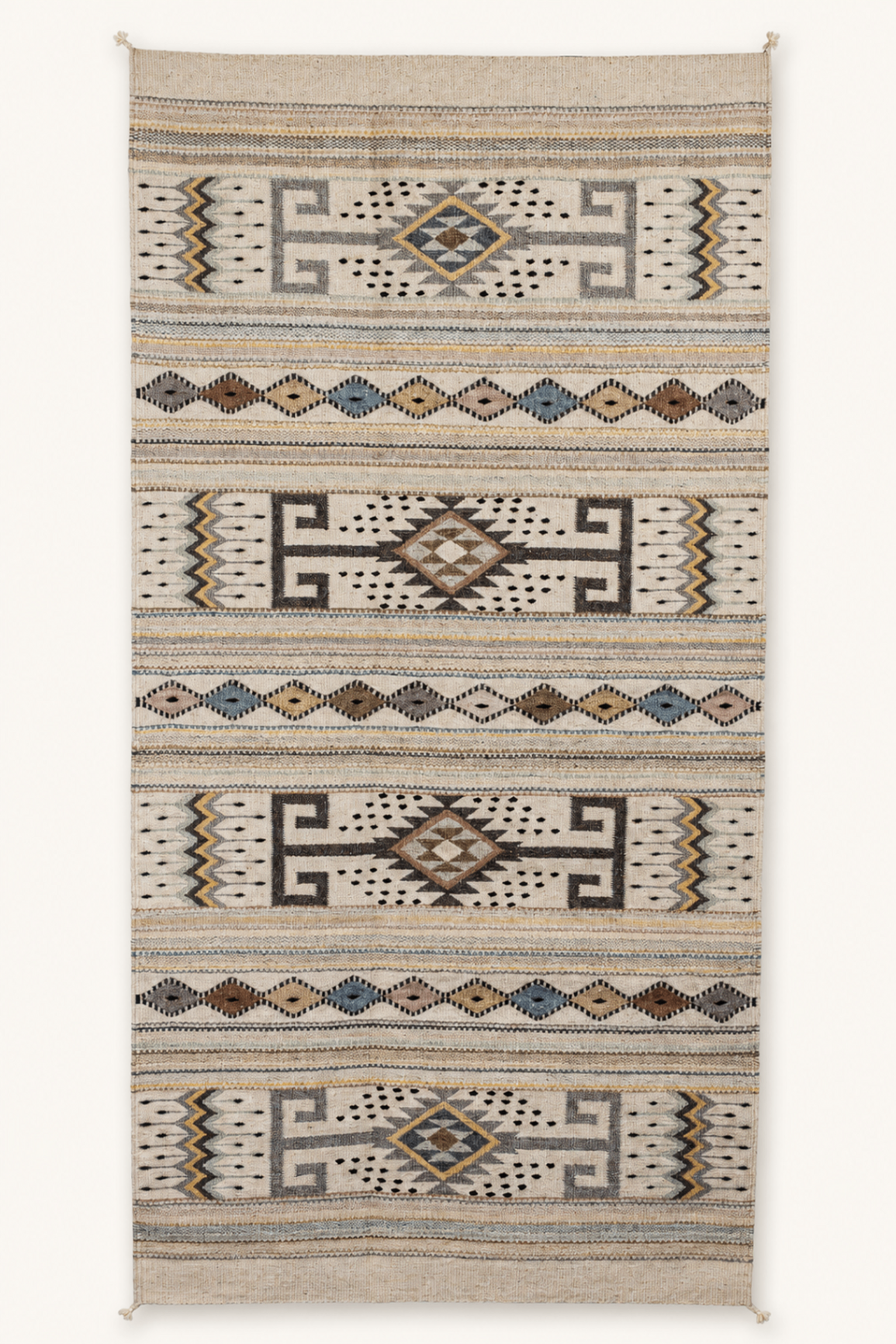
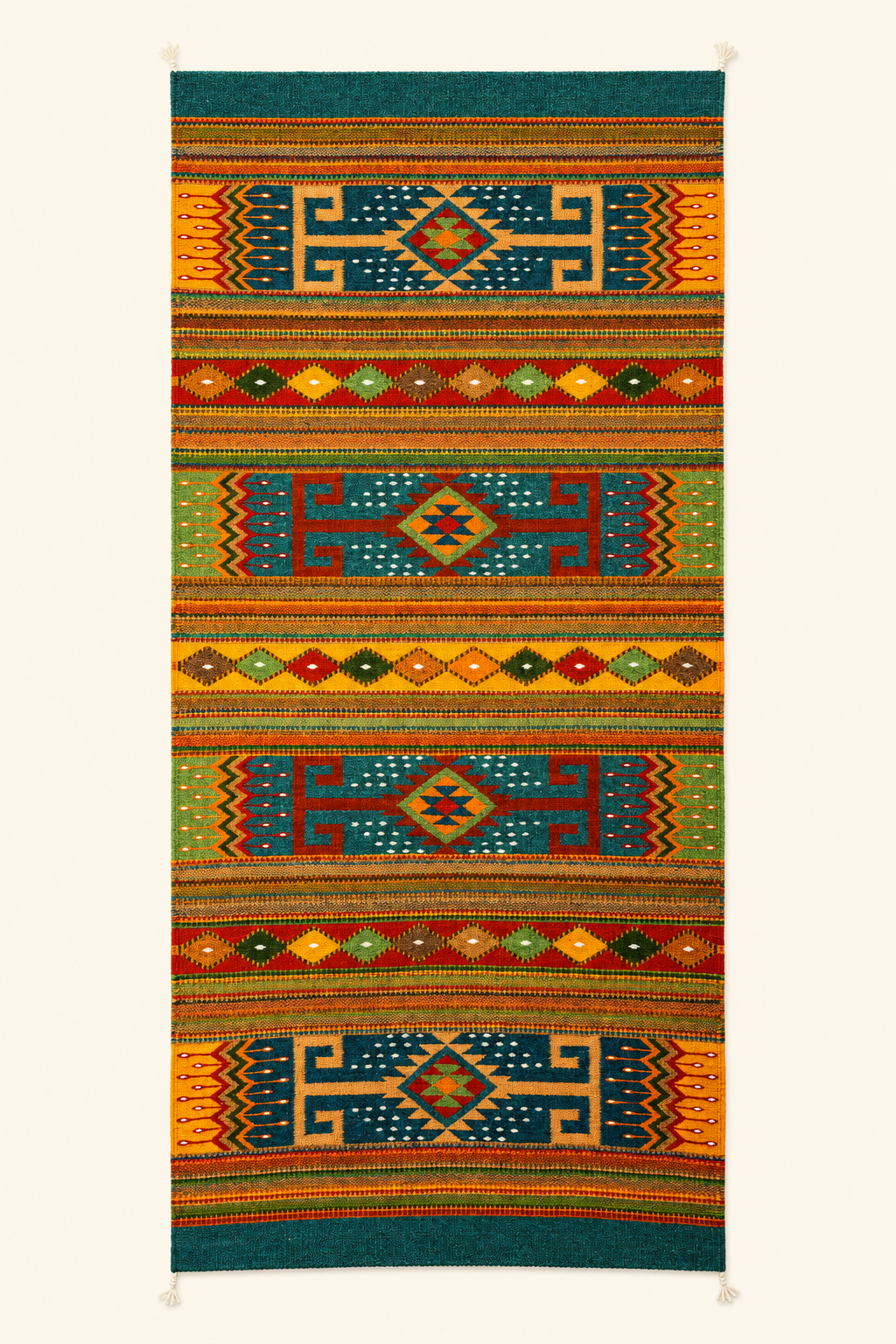
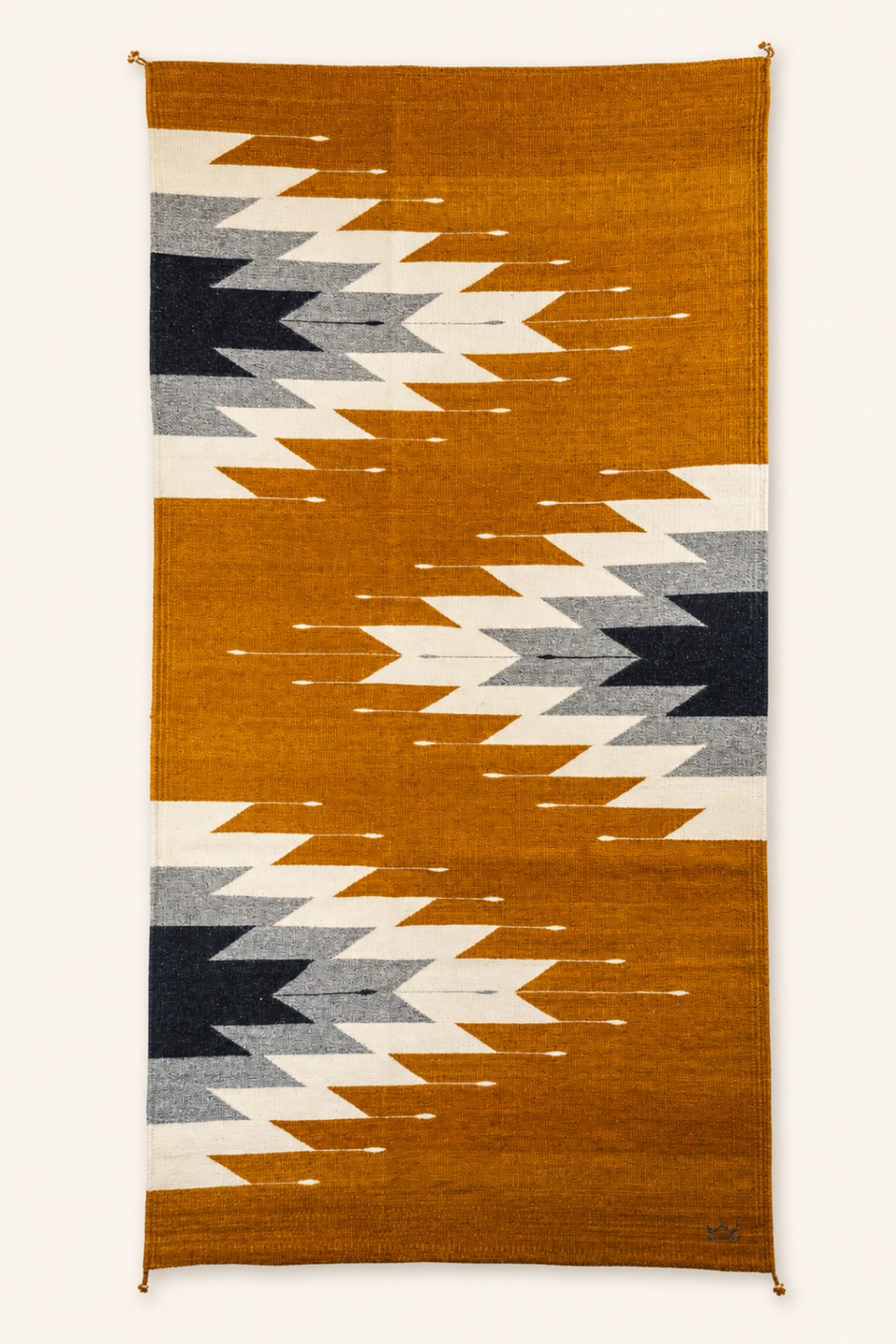
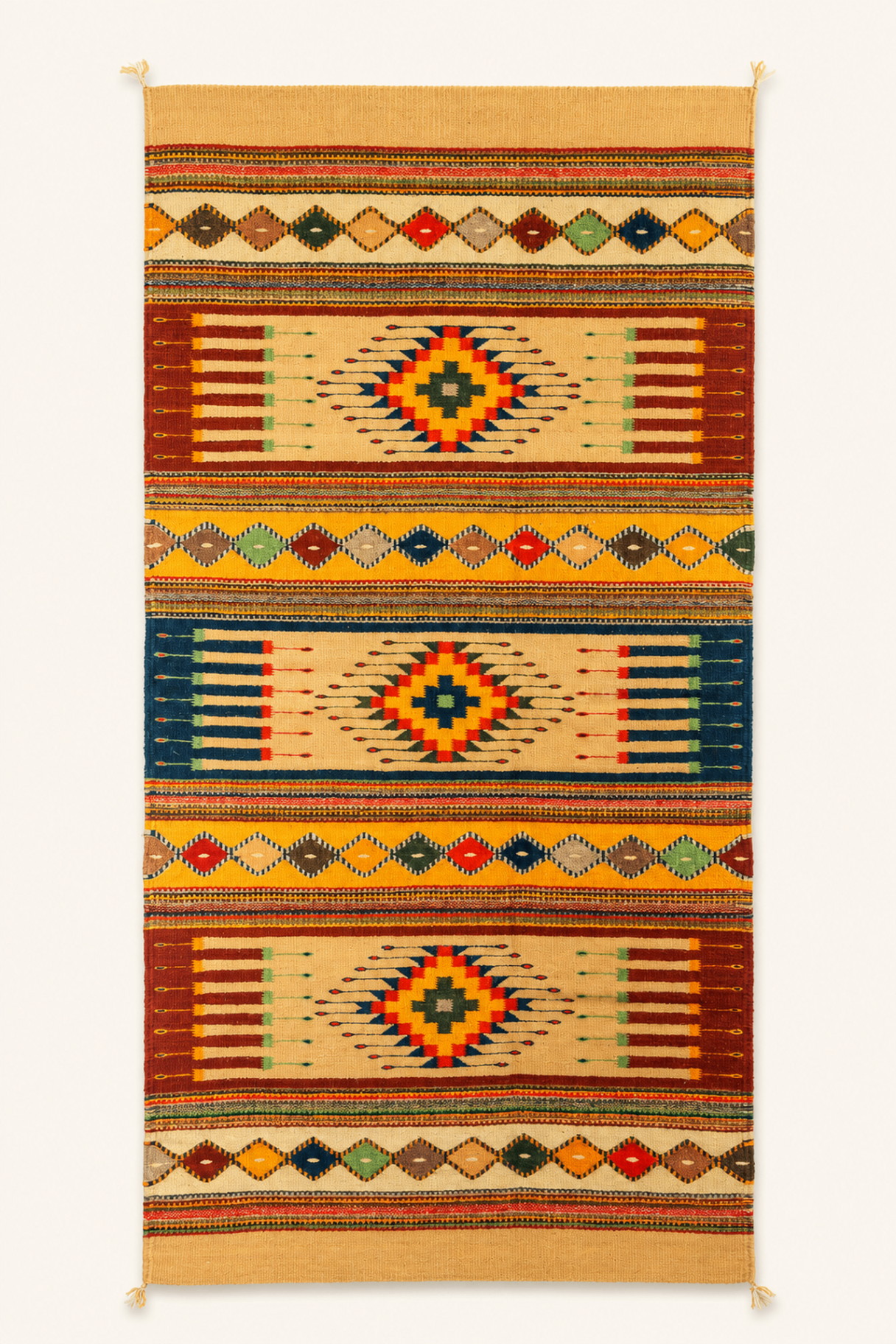
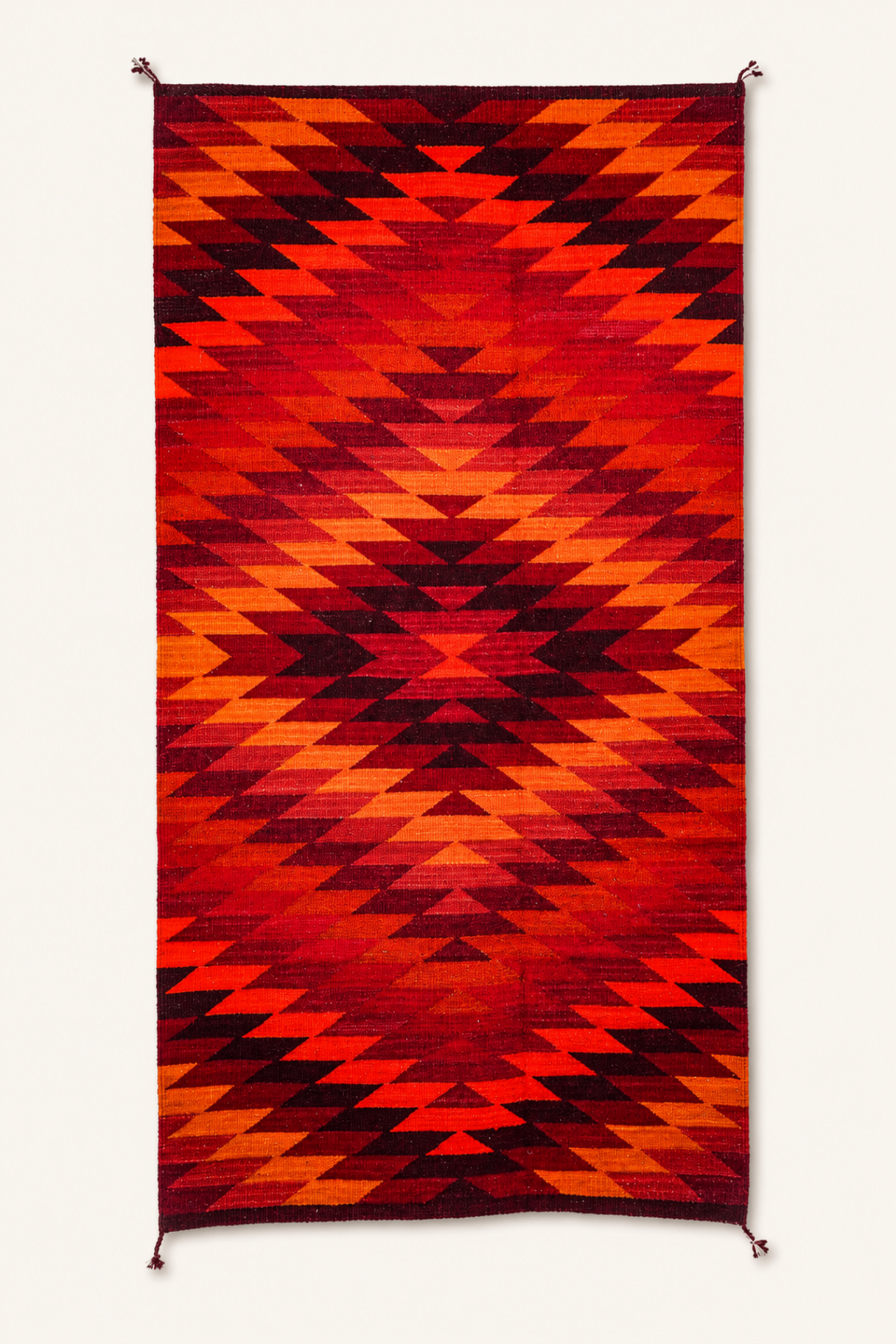
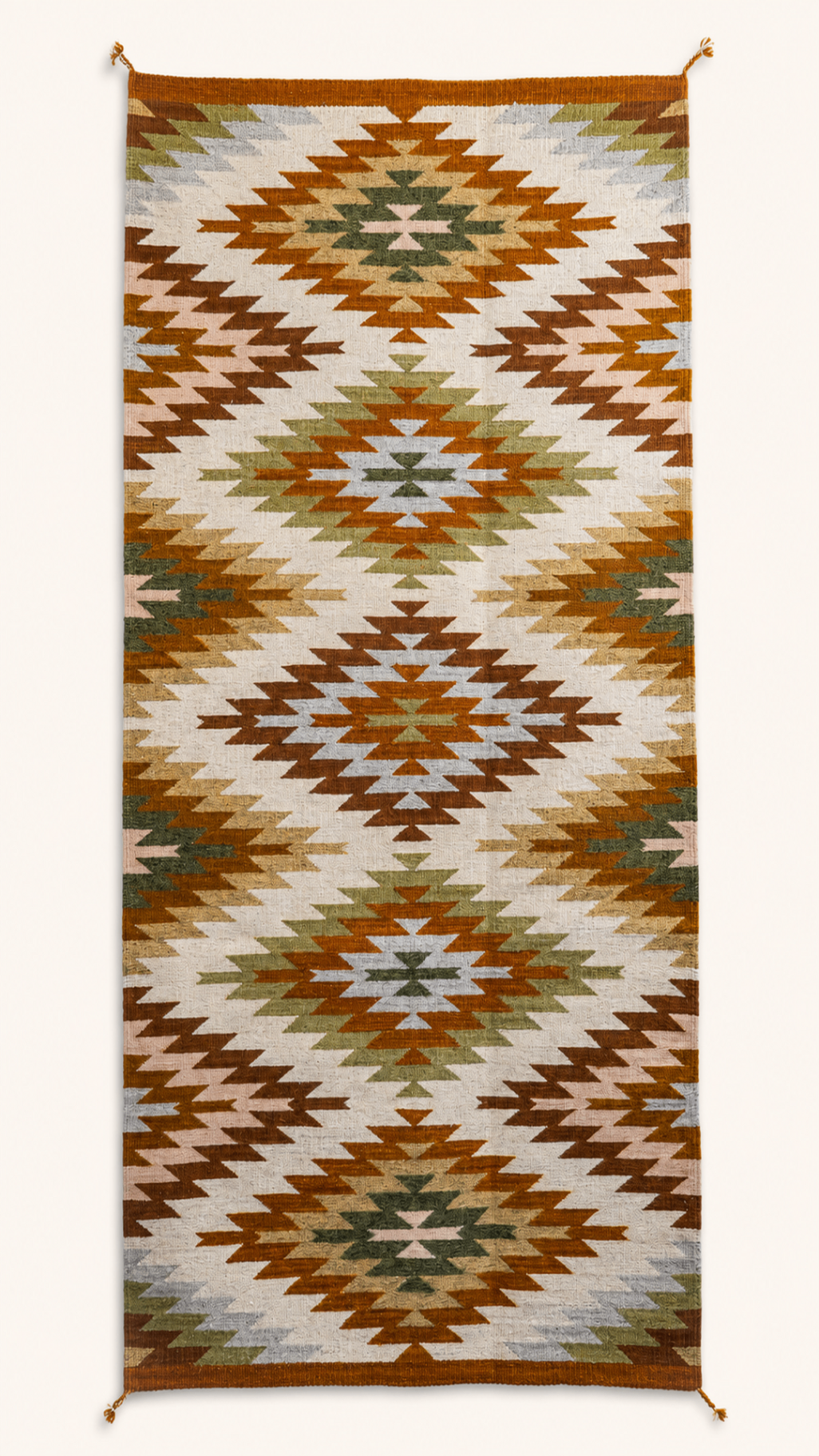
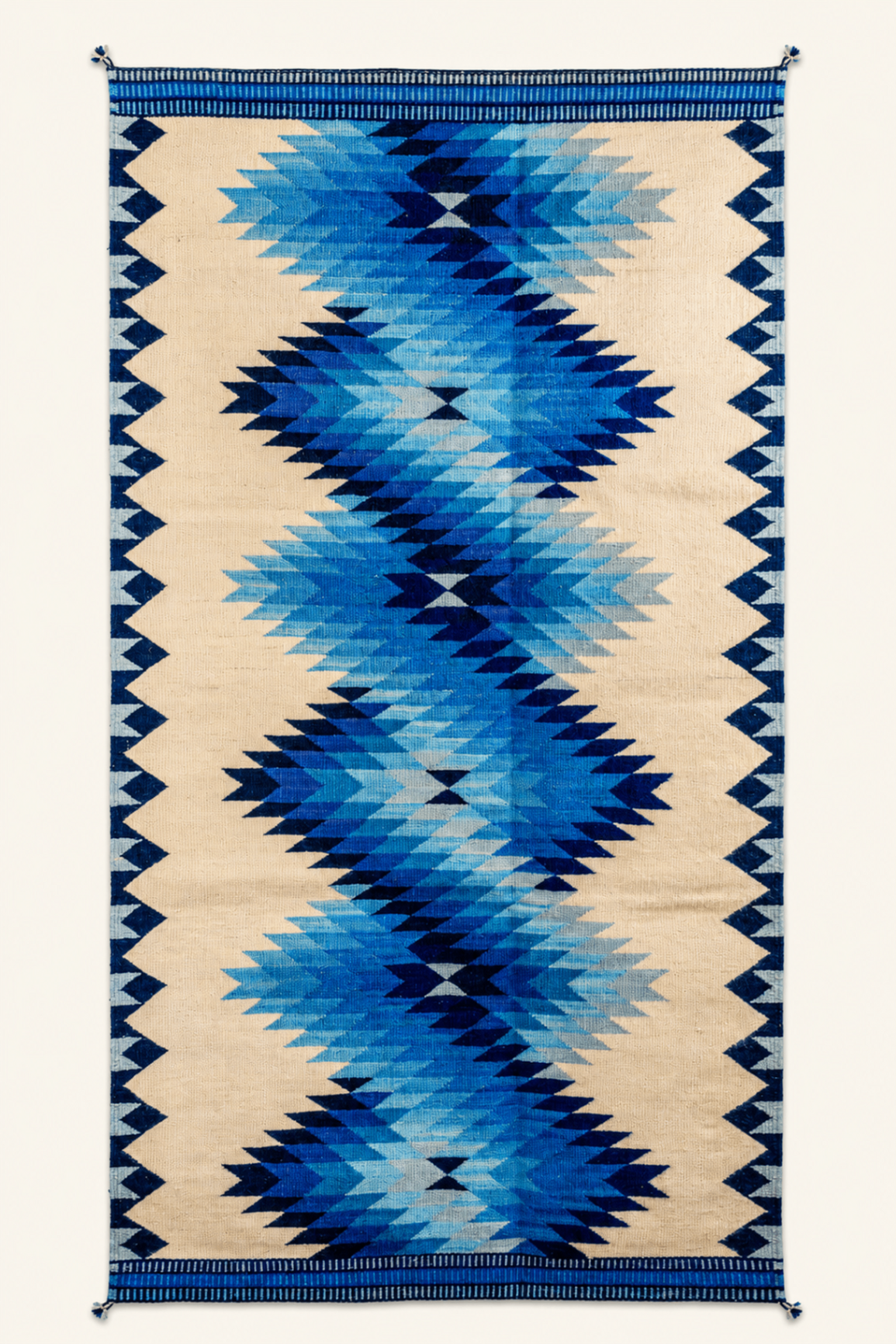
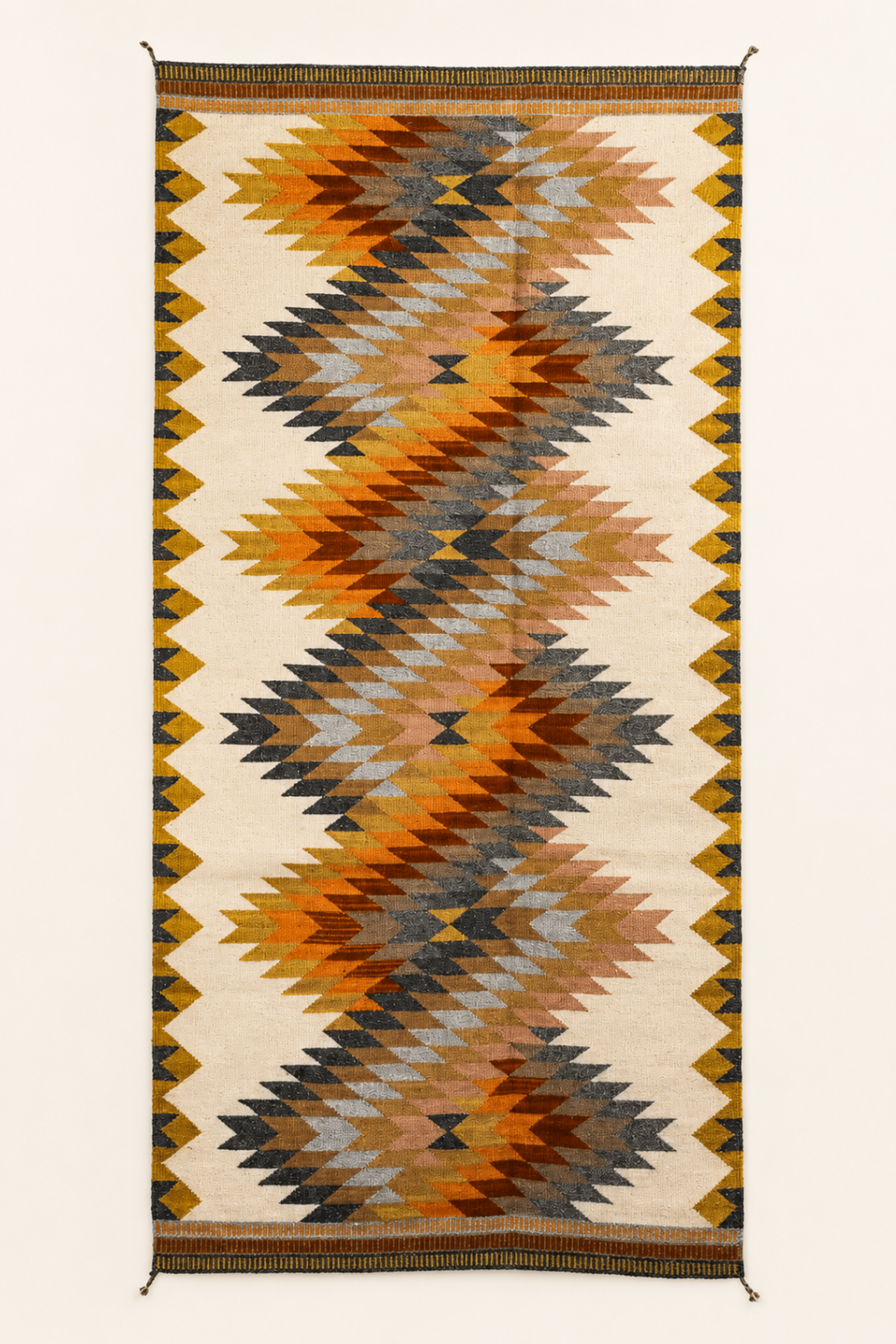
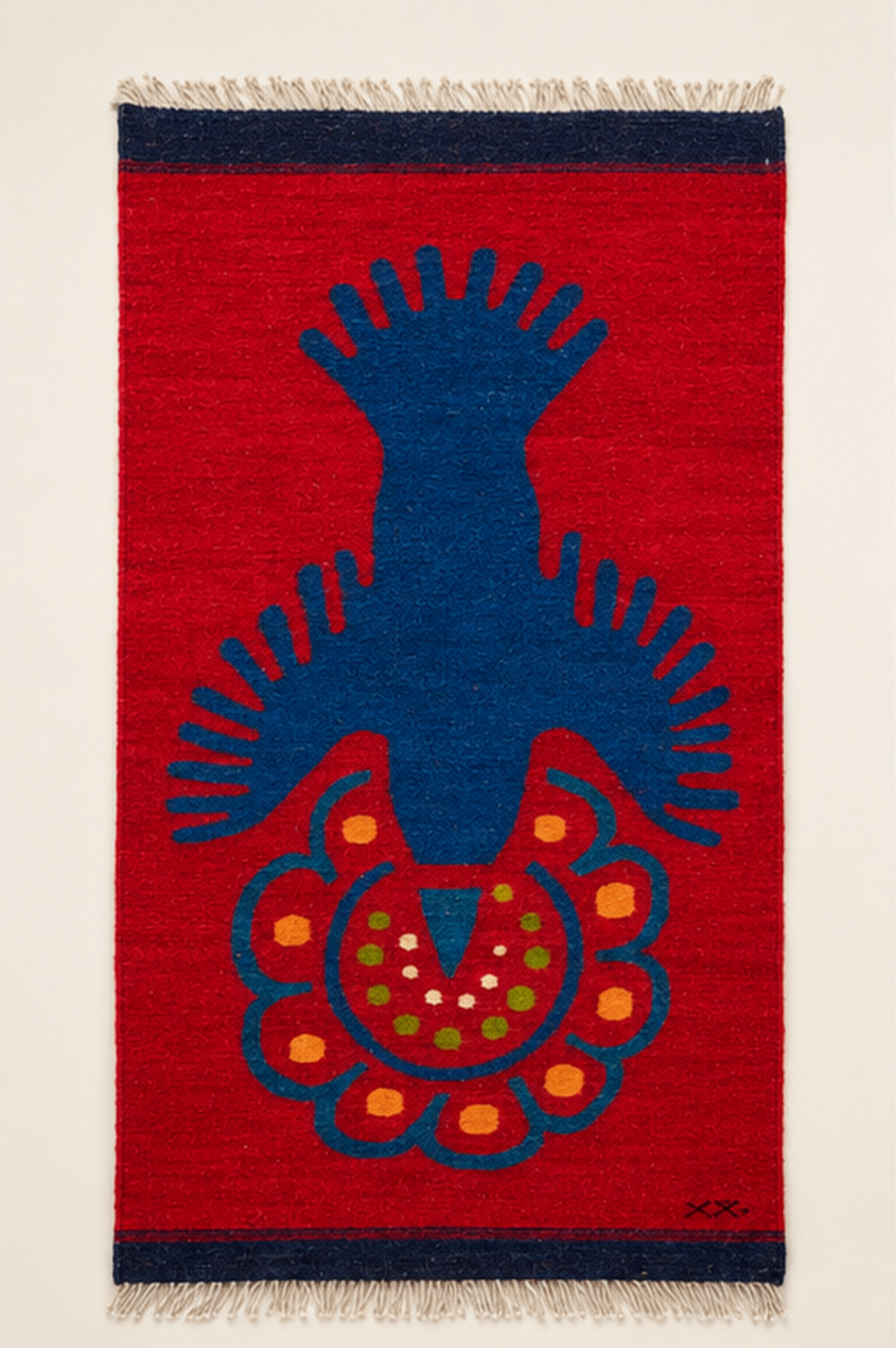
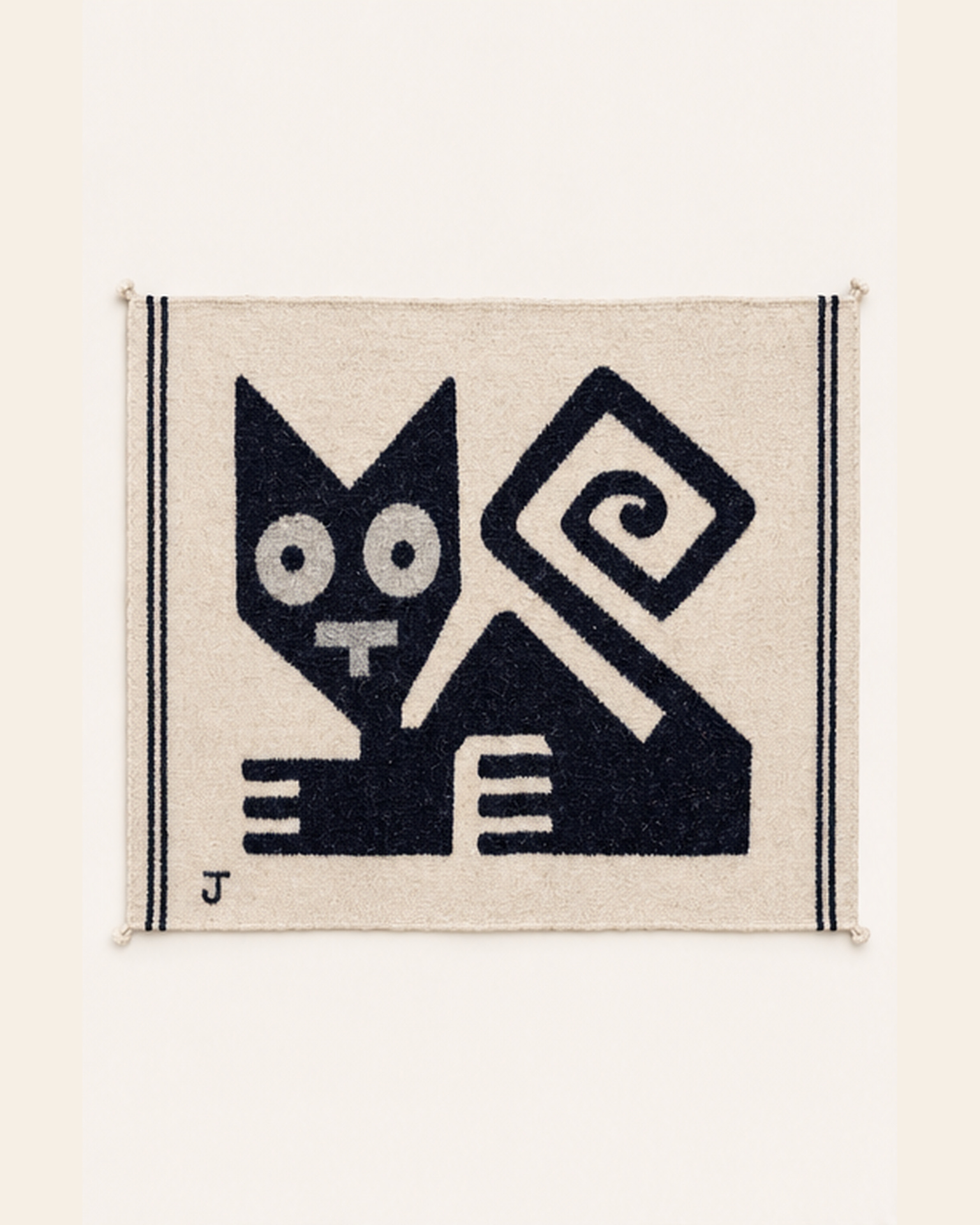
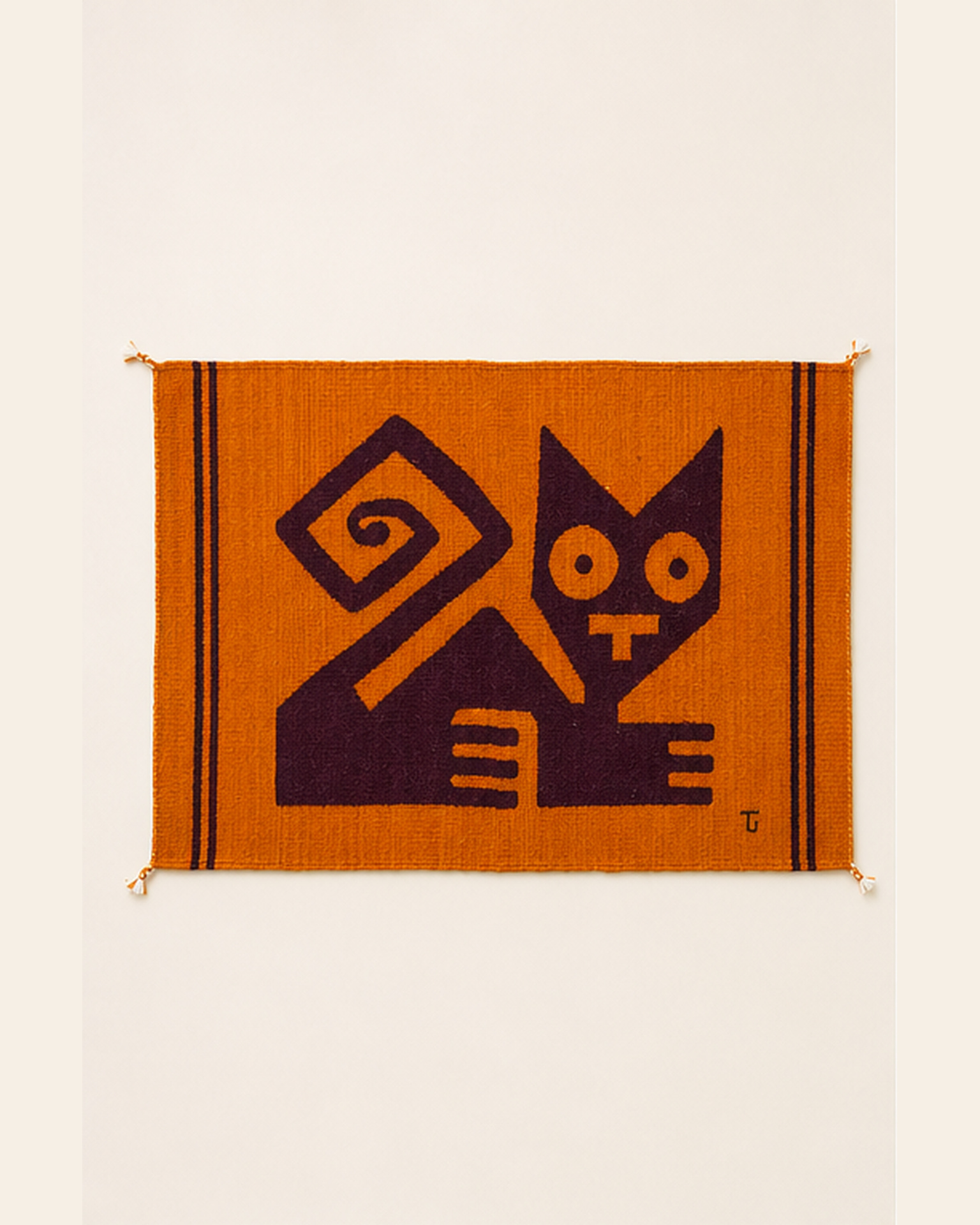
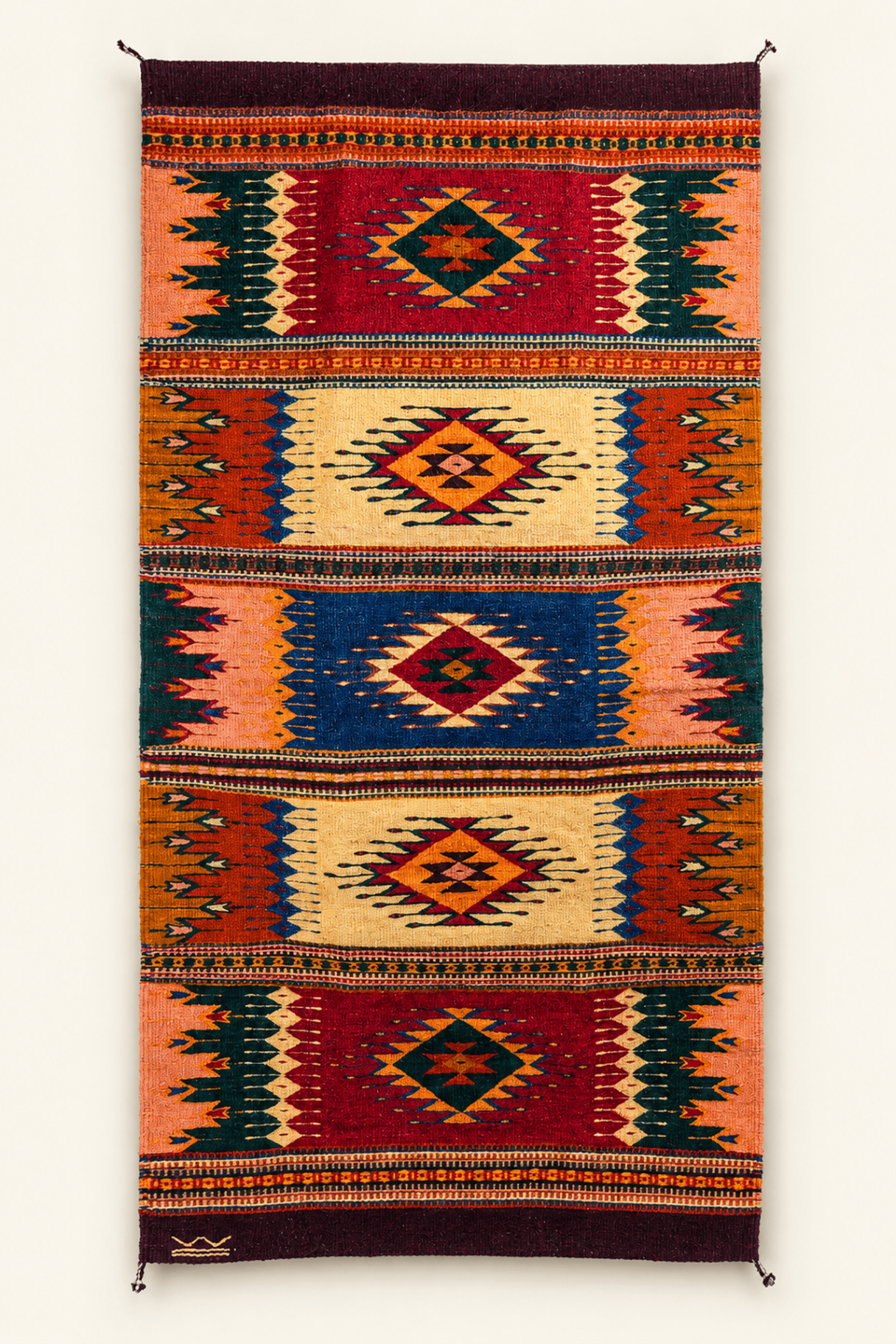
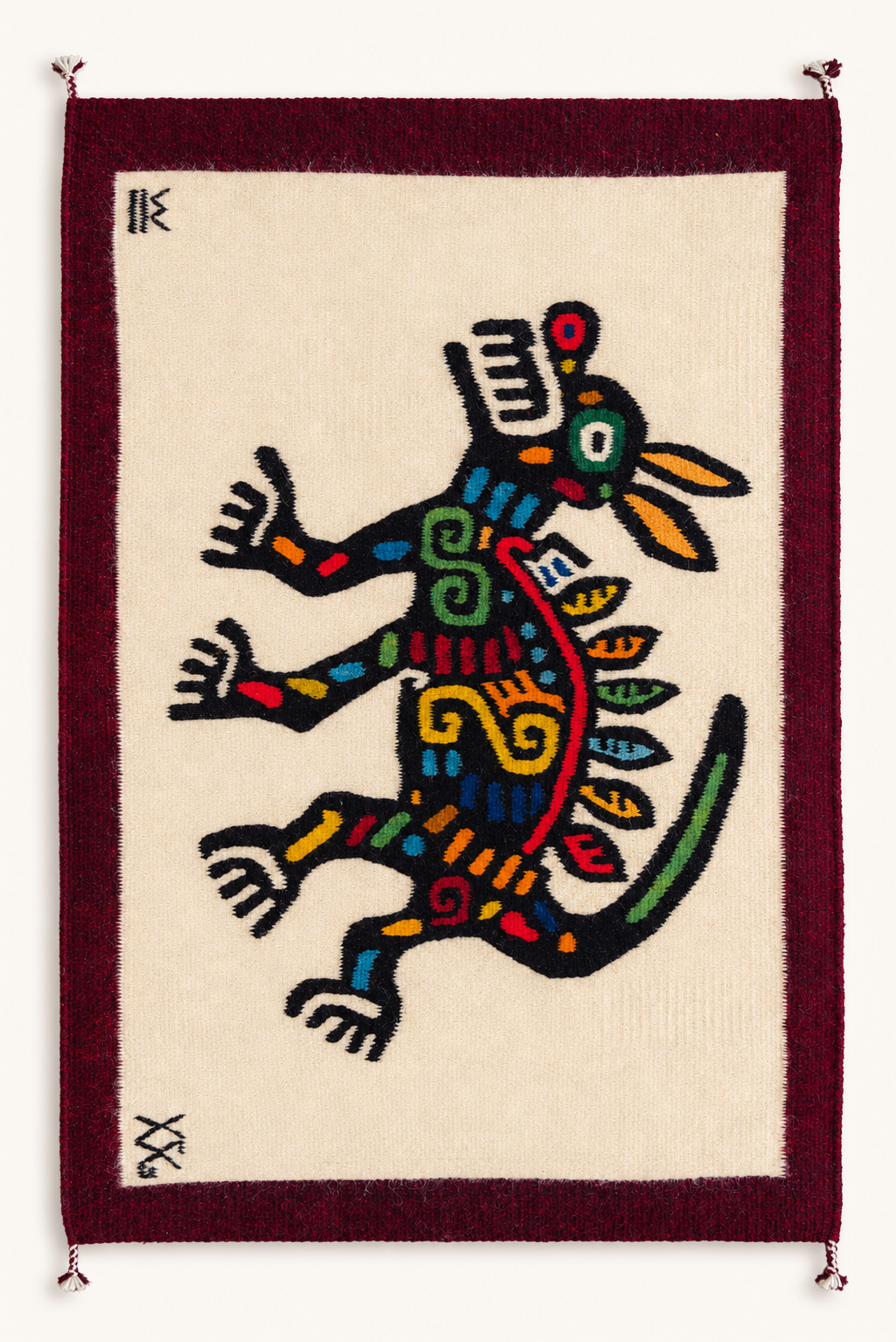
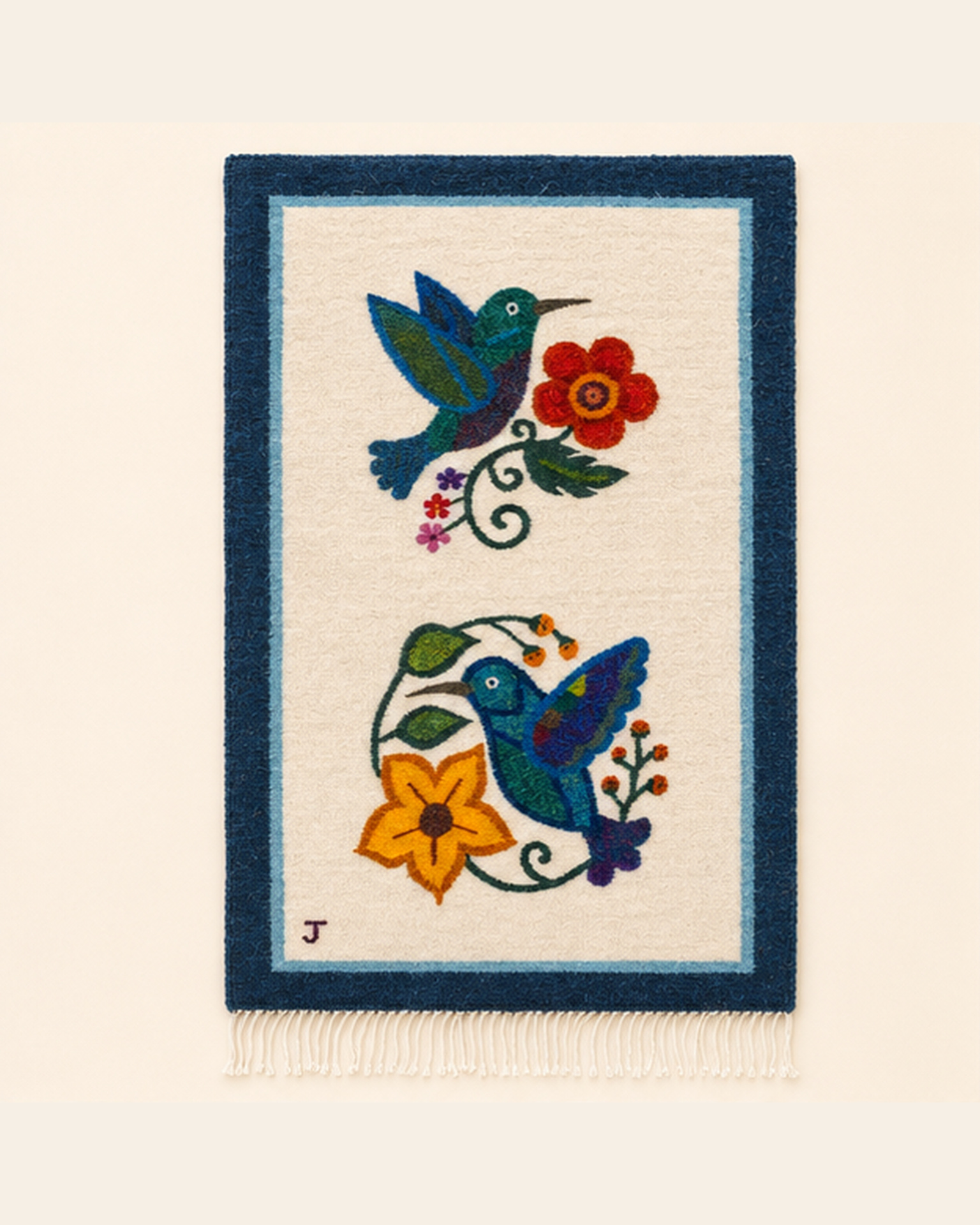
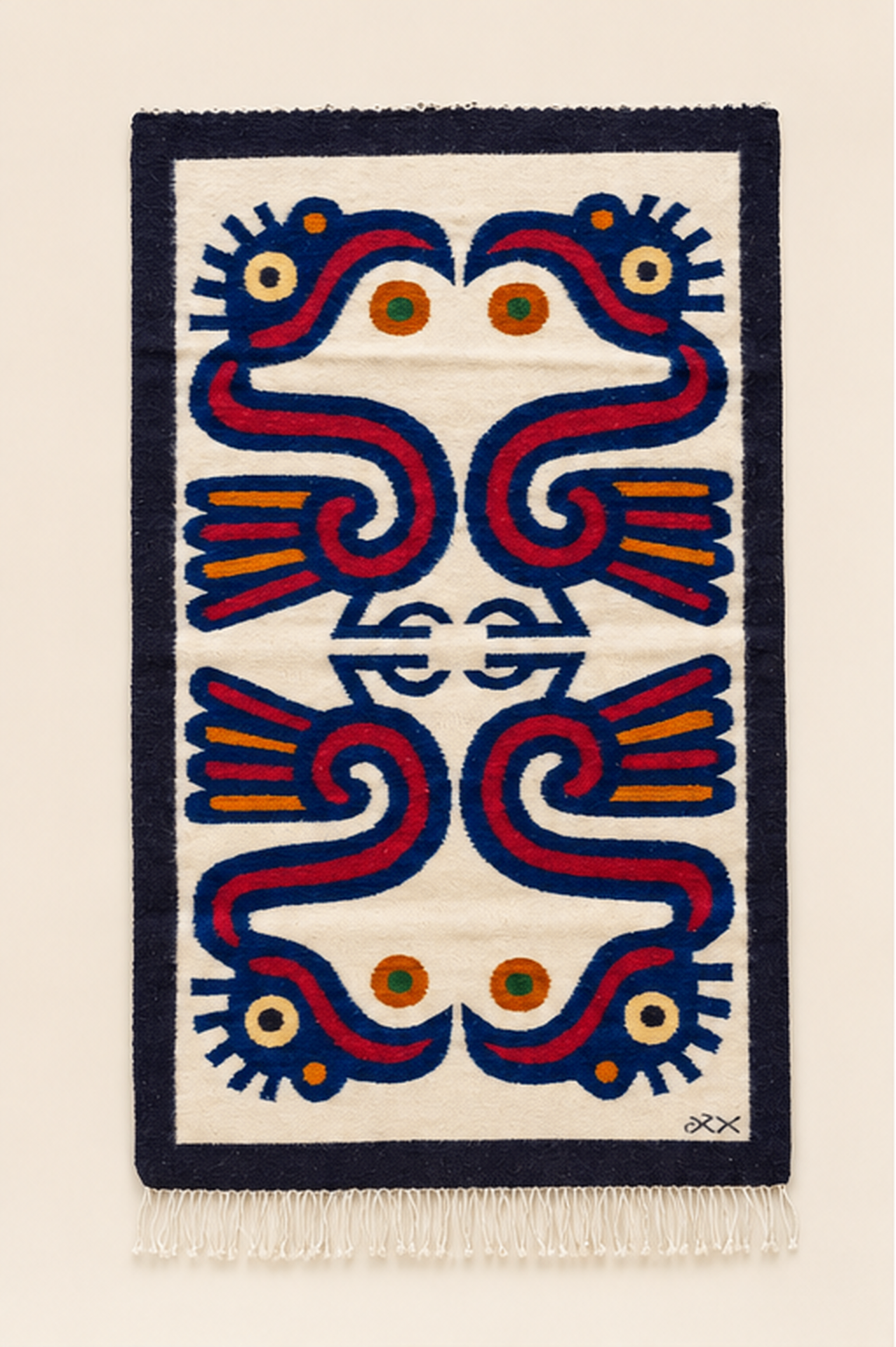
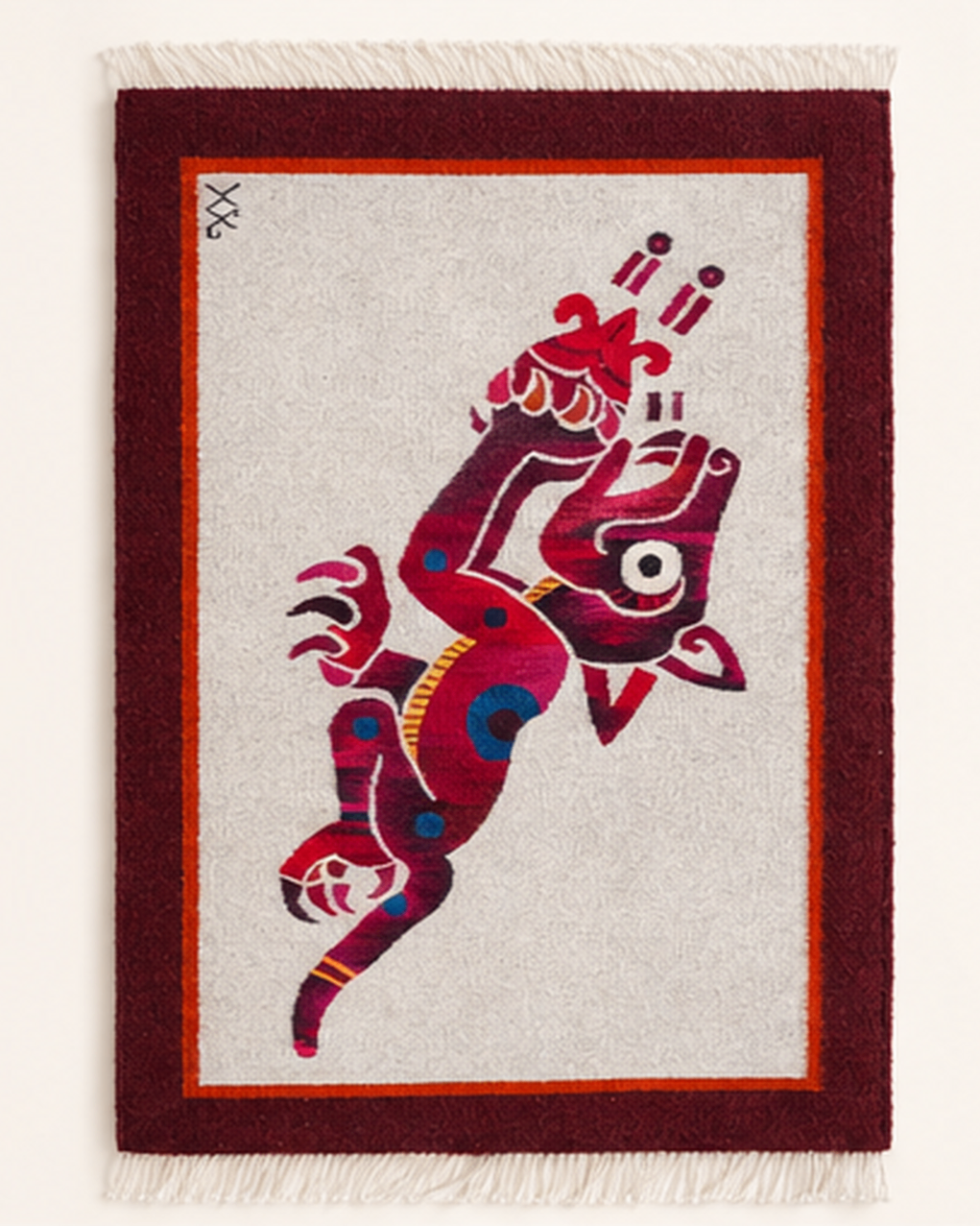
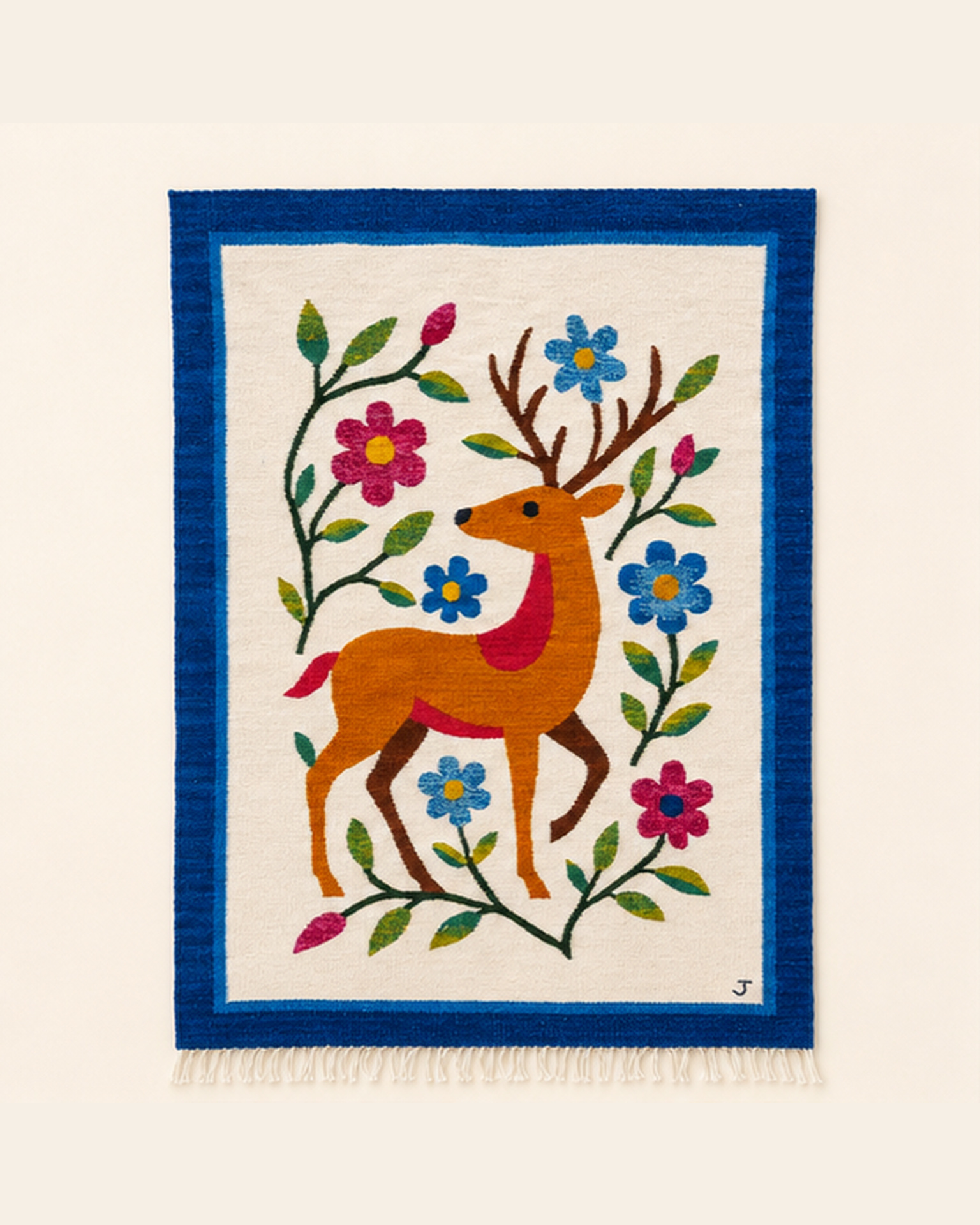
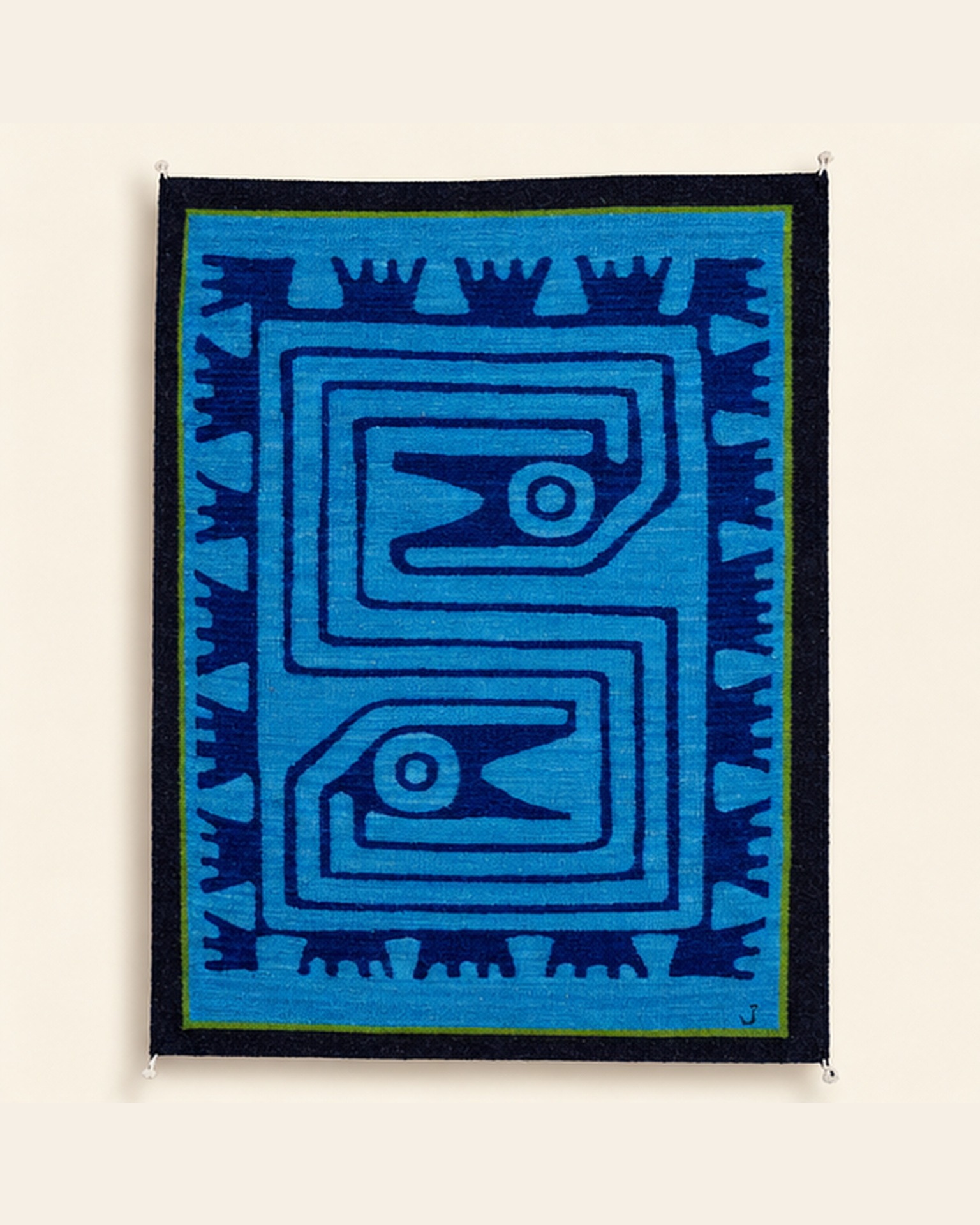
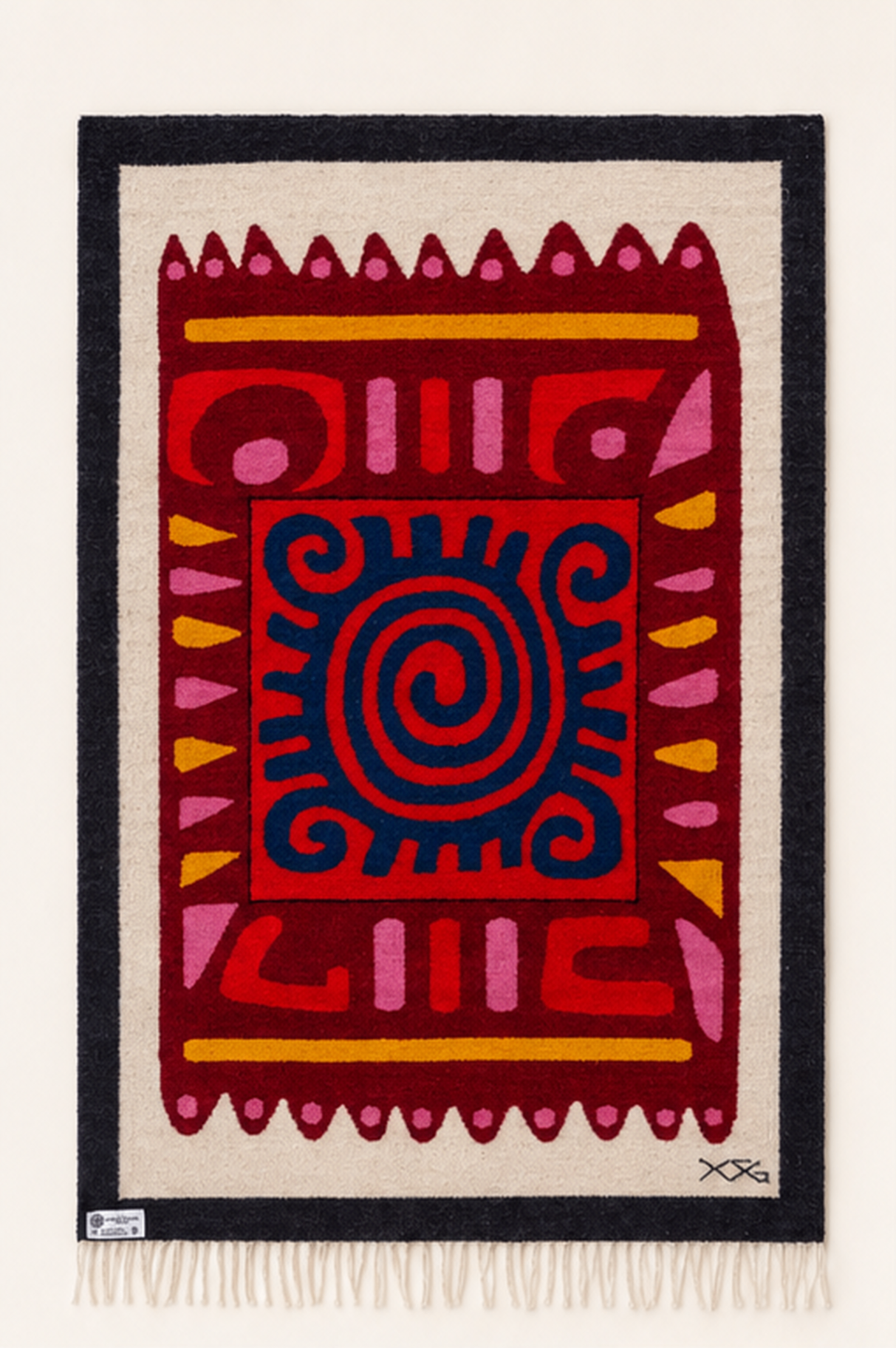
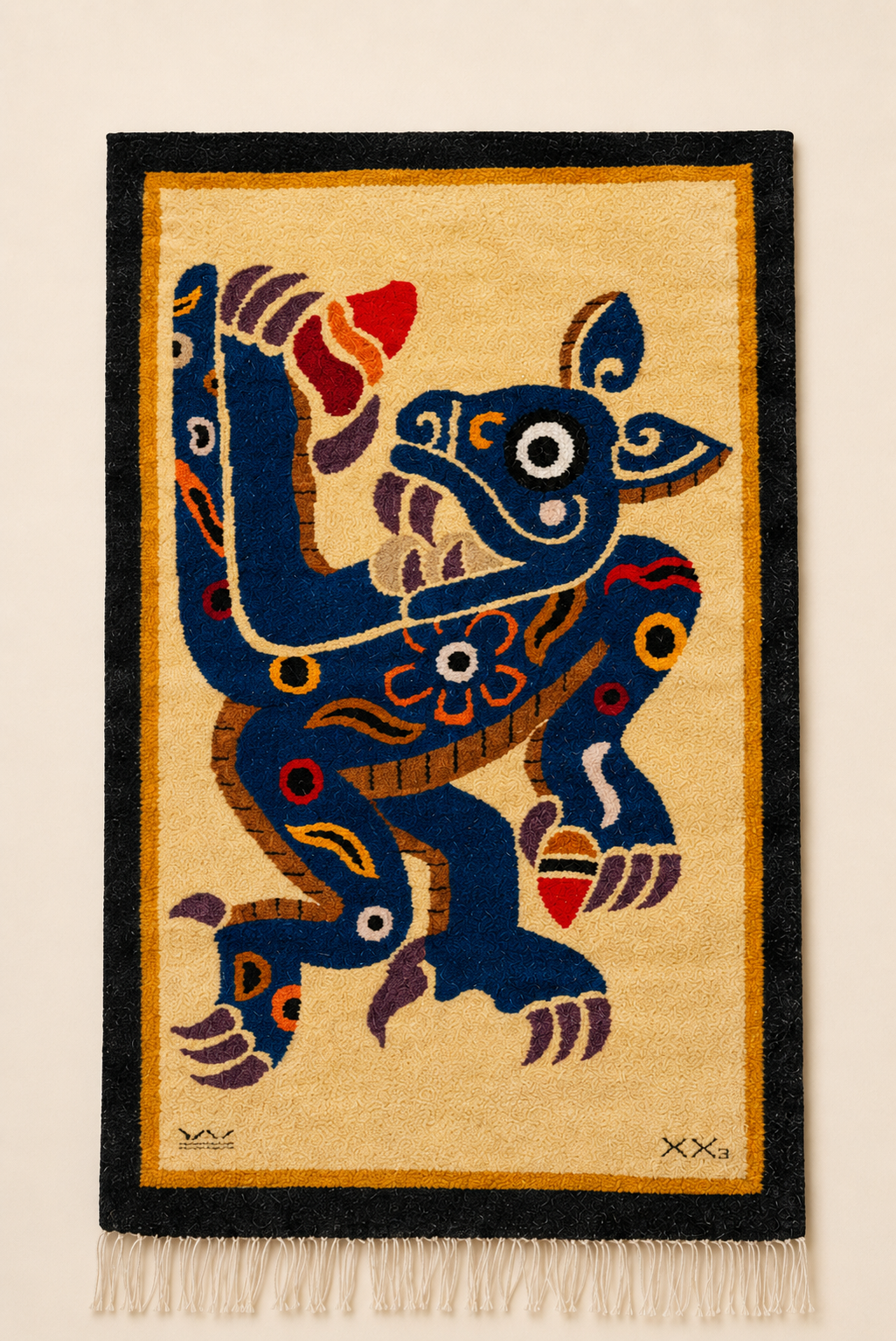
Teotitlán del Valle sits about forty minutes east of Oaxaca City, at the base of the Sierra Juárez. Weaving here predates the Spanish — the village paid tribute in cloth to the Aztecs — and the treadle loom introduced in the 1500s turned that tradition into the wool rug trade the village is known for today.
Most rugs sold as 'Oaxacan' in the United States pass through several hands: a gallery, an importer, an exporter, a middleman in the village. Buying from the workshop keeps the story and the money with the weaver whose name is on the piece.
Wool is washed, carded and spun before the dye pots go on. Cochineal is ground and mixed with lime juice for reds; indigo is fermented for blues; marigold and pecan husk give golds and browns. The dyed yarn is dried in the sun and wound before warping.
A weaver walks the pedals of the loom and packs each weft pass with a comb. A 2.5' × 5' rug takes weeks; a large room-size piece can take months. The tighter the packing, the heavier and flatter the finished rug.
The stepped-fret greca patterns come from the stone mosaics at Mitla. Diamonds are read as the four directions or the eye of god; the serpent and the jaguar carry pre-Hispanic weight from Monte Albán. Some designs are the weaver's own; every product page says which is which.
We do not invent folklore for a sale. If a motif's meaning is documented, we say so. If a pattern is a contemporary design by the weaver, we say that instead.
Pieces ship the next business day with UPS tracking, from the US or direct from Oaxaca. Complimentary US shipping over $150.
Because each rug is one of one, sizes vary slightly by piece; the exact dimensions are listed on each product page. If a rug is not right for your room, we accept returns in original condition.