
Places of Oaxaca
Teotitlán del Valle: From Ancient Zapotec Settlement to Rug-Weaving Capital
NISAYA · 8 min read · Last updated August 2026

In the Central Valleys of Oaxaca, at the foot of the Sierra Juárez mountains, generations of Zapotec families have transformed wool, natural color and inherited knowledge into handwoven textiles.
Teotitlán del Valle is now known around the world for its rugs. But the community’s weaving history began long before wool rugs, international collectors or modern design entered the story.
This is the history of how an ancient Zapotec community developed into one of the world’s most respected centers of handwoven textile art.
Where Is Teotitlán del Valle?
Teotitlán del Valle is a Zapotec community located approximately 30 kilometers east of Oaxaca City in the Tlacolula Valley. The village rests near the foothills of the Sierra Juárez, surrounded by a landscape that has shaped its agriculture, architecture, colors and textile traditions.
The name Teotitlán comes from Nahuatl and is commonly translated as “land of the gods” or “place among the gods.” The community also has Zapotec names, including forms recorded as Xaguie, Xaguixe and Xaquija, whose interpretations are connected to the mountain, stone and celestial landscape.
Today, Teotitlán is internationally recognized for its family weaving workshops. Wool is prepared, dyed and woven on wooden pedal looms into rugs, runners, bags and textile artworks.
For the people of Teotitlán, however, weaving is more than a commercial activity. It is knowledge carried through families and adapted by every generation.
When Was Teotitlán del Valle Founded?
Municipal histories commonly identify 1465 as the formal founding date of Teotitlán del Valle. Historical accounts describe the community as Xaquija, a name associated with a celestial constellation and an important sacred site.
The date should not be interpreted as the beginning of Zapotec life in the region. Zapotec civilization and settlement in Oaxaca’s Central Valleys extend much further into the past. Local history, oral tradition and archaeological evidence all connect the surrounding area to a much older cultural landscape.
In 1527, during the colonial period, the community received titles from the Spanish colonial government. The town later developed around institutions and buildings created during the colonial era, including the church of the Preciosa Sangre de Cristo, constructed near the remains of an earlier Zapotec ceremonial site.
Teotitlán’s history therefore includes multiple layers: ancient Zapotec heritage, the traditionally recorded founding date of 1465, colonial transformation and the living Indigenous community that continues today.
Weaving Before Wool Rugs
Textile production in Teotitlán did not begin with the wool rug.
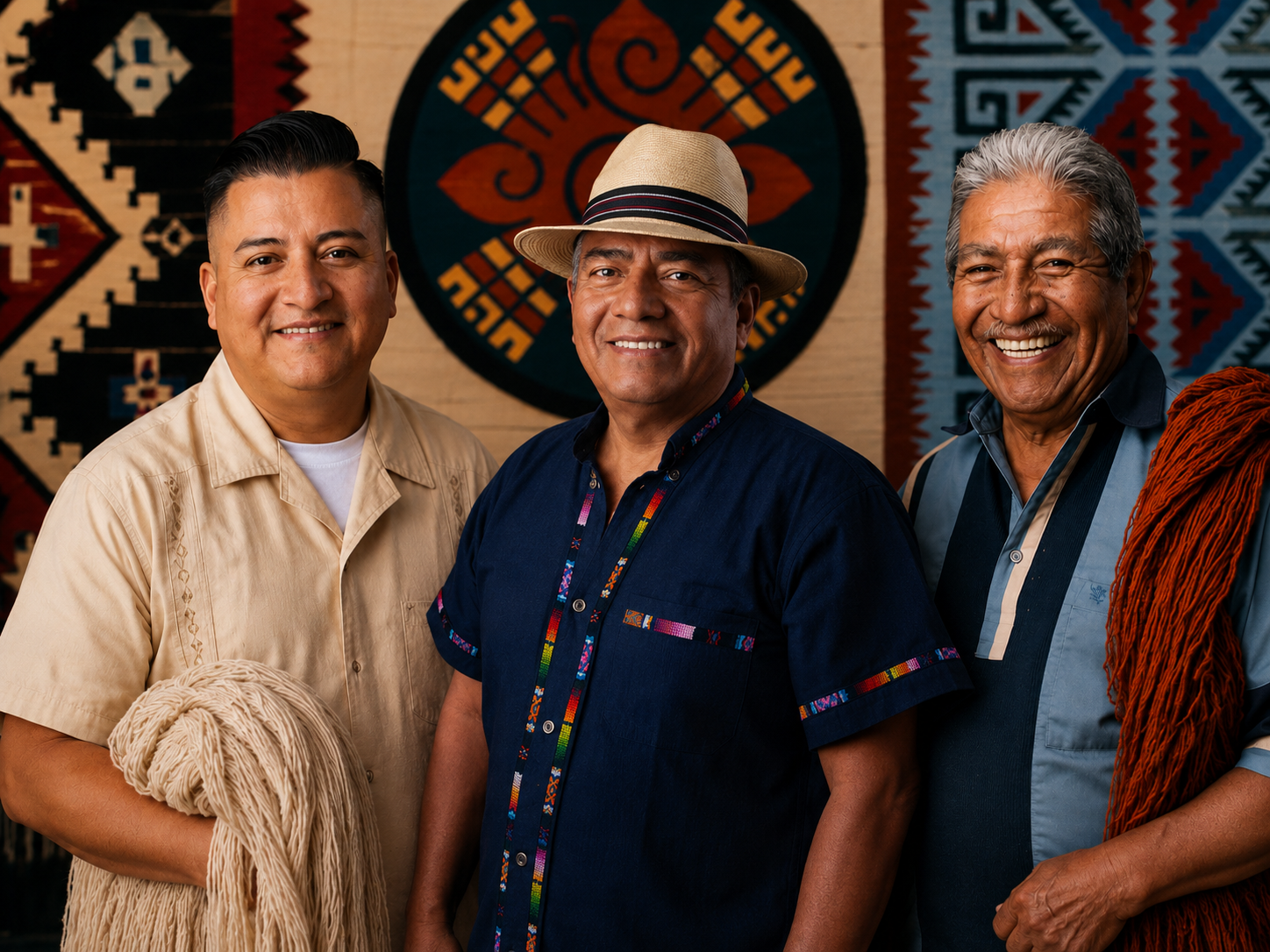
Before the arrival of sheep and European pedal looms, Indigenous weavers worked primarily with plant fibers, including cotton and ixtle. Textiles were produced on the backstrap loom, an ancient tool that allows the weaver to control tension using the movement of the body.
By the end of the 15th century, textiles were already an important part of the regional economy. Historical records indicate that communities in this area provided large quantities of woven cotton mantas as tribute to Tenochtitlán.
These early textiles served practical, ceremonial and economic purposes. They also established the deep foundation of fiber knowledge on which later wool weaving would develop.
The story of Teotitlán’s rugs is therefore not the story of a new craft replacing an old one. It is the story of an existing weaving culture adapting new fibers and tools while continuing to transmit knowledge through generations.
The Arrival of Wool and the Pedal Loom
During the 16th century, Spanish colonization brought sheep, wool and European-style pedal looms to Oaxaca.
The introduction of wool allowed weavers to produce heavier and more durable textiles. The pedal loom made it possible to weave larger pieces than those traditionally created on backstrap looms.
Teotitlán’s weavers adapted these materials and tools to their own knowledge, needs and visual language. Wool blankets, serapes and other substantial textiles became important products of the community.
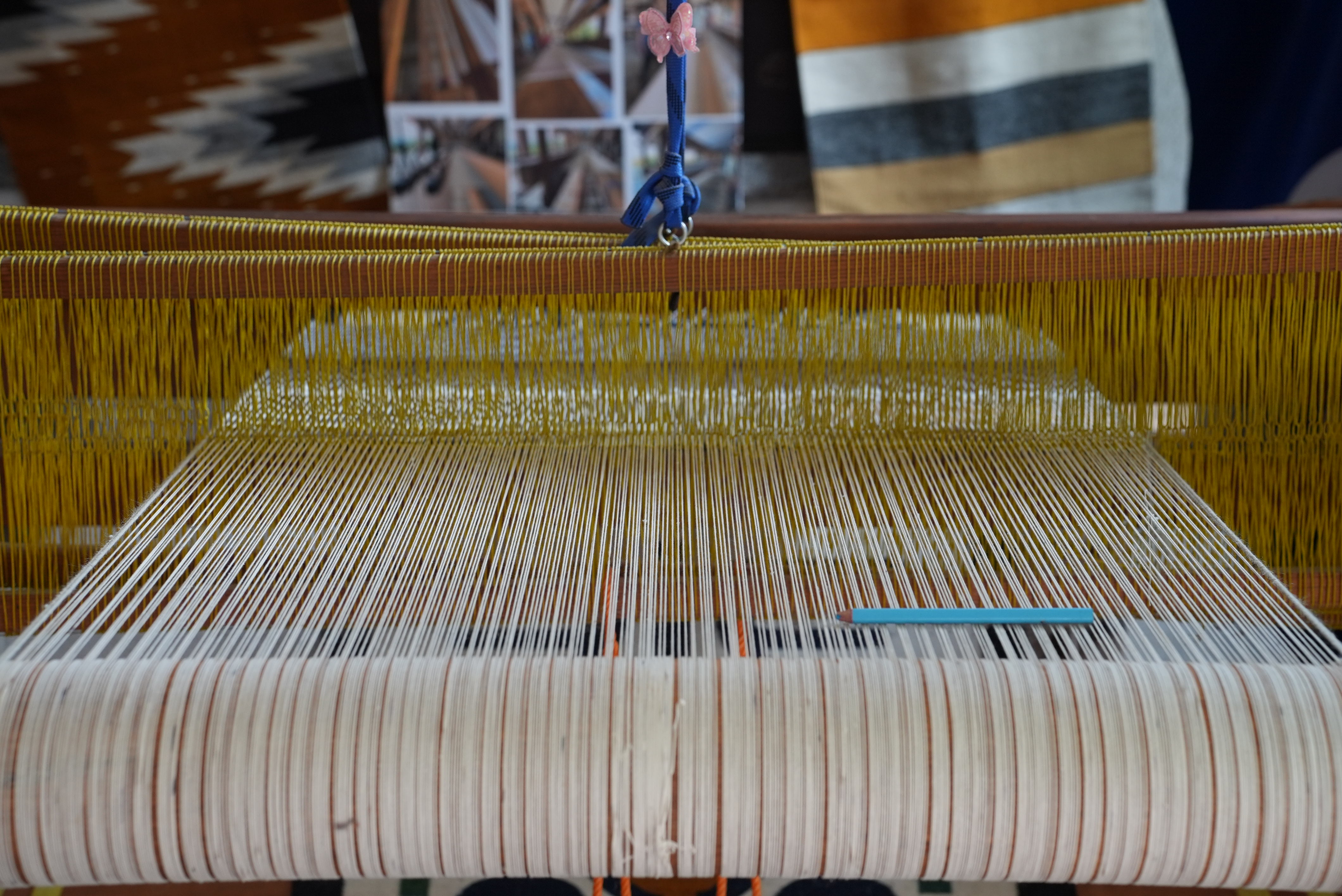
Over time, weaving on wooden pedal looms became one of the defining practices of Teotitlán del Valle. The weaver operates the loom with both hands and feet, opening the warp with the pedals, placing the weft and compacting each row into the developing textile.
The process requires physical coordination, mathematical precision and an understanding of tension, color and proportion. Complex rugs may take weeks or months to complete.
When Did Teotitlán Become a Rug-Weaving Capital?
There was no single year when Teotitlán del Valle was officially declared the “rug capital” of Oaxaca.
Its reputation developed gradually.
The community’s textile production was already respected during the colonial era and remained important into the 19th century. During the 20th century, new transportation routes connected Oaxaca to larger Mexican and international markets.
The completion of major highways during the 1940s made travel and commerce easier. During the 1950s and subsequent decades, more travelers, collectors, designers and cultural researchers began visiting Oaxaca and its artisan communities.
By the 1970s, demand for Teotitlán textiles had expanded significantly. International importers and designers worked with local workshops, commissioning rugs based on traditional geometry, special designs and contemporary artwork.
This period helped transform the wool rug into the product most closely associated with Teotitlán del Valle.
The title “rug-weaving capital” is therefore best understood as an earned cultural reputation—not an official designation granted on one specific date.
International Recognition During the 20th Century
As Teotitlán’s rugs reached new markets, individual workshops developed recognizable approaches to design, color and technique.
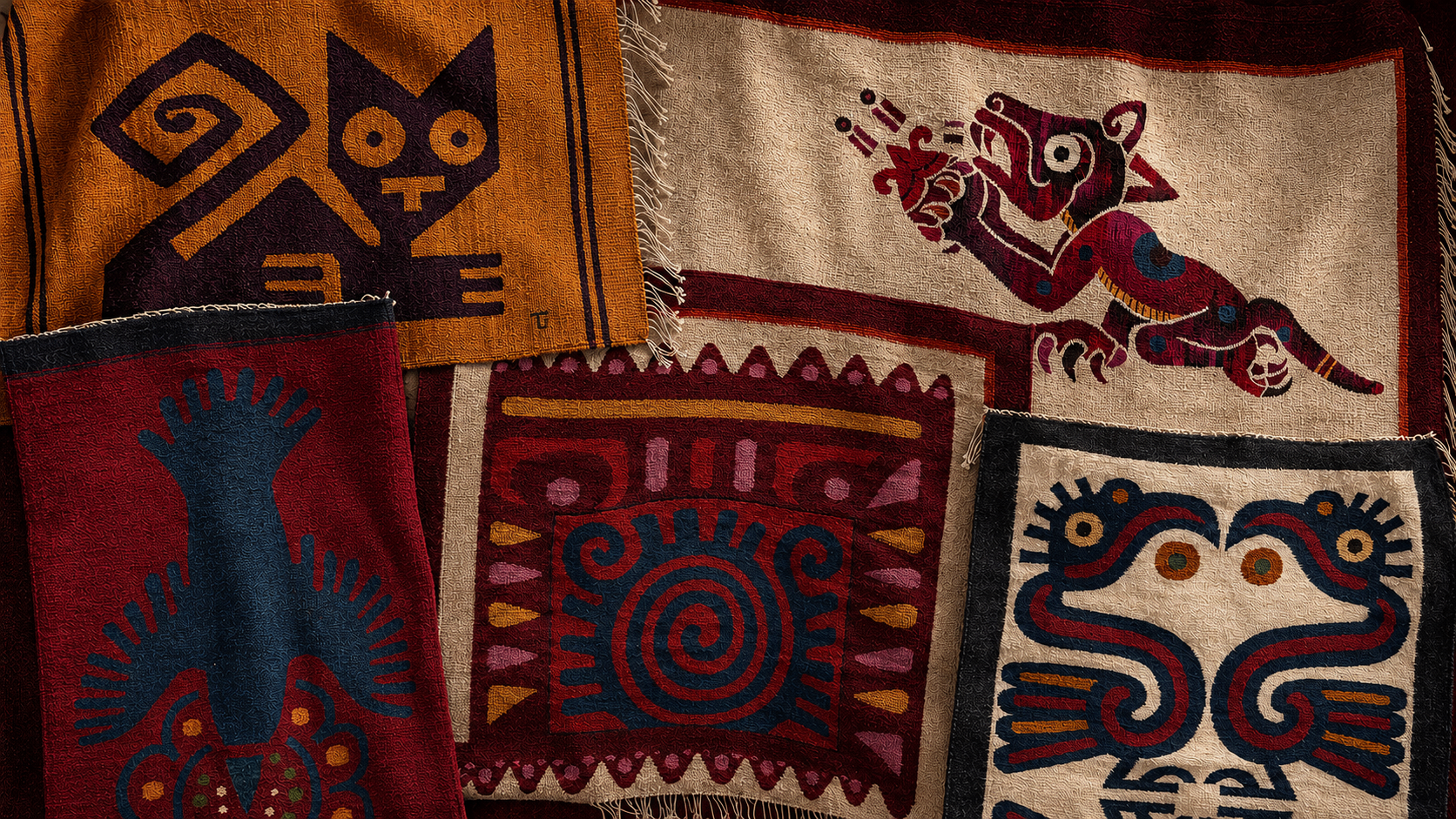
Some weavers specialized in Zapotec grecas, diamonds, stepped forms and imagery inspired by the architecture of ancient sites such as Mitla and Monte Albán. Others created figurative textiles, abstract compositions or interpretations of modern art.
The growth of international interest also brought challenges. Increased demand encouraged faster production, repeated designs and the use of commercially available fibers and dyes.
At the same time, several master weavers worked to protect traditional processes and restore knowledge that was at risk of disappearing.
Among the most influential was Maestro Isaac Vásquez García.
Isaac Vásquez and the Revival of Natural Dyes
Isaac Vásquez García is recognized as a pioneer in the recovery of traditional weaving and natural-dye practices in Teotitlán del Valle.
Rather than allowing commercially produced colors to completely replace older methods, Maestro Isaac studied, preserved and shared techniques for creating color from the natural world.
Cochineal could produce reds, pinks and purples. Indigo created deep blues. Walnut, marigold, lichen, acacia and other local materials contributed browns, golds, greens and earth tones.
The final color depended on more than the dye material. Water, temperature, preparation, mineral content, mordants and the natural shade of the wool could all influence the result.
Maestro Isaac’s work helped demonstrate that the traditional processes of Teotitlán were not relics of the past. They remained a living artistic language capable of producing both historic and contemporary designs.
His knowledge continued through his family. Today, the work of Isaac Vásquez Studio is carried forward by subsequent generations, including Jerónimo Vásquez Gutiérrez and Wilmer Vásquez Luis.
Discover the Legacy of Maestro Isaac Vásquez
Teotitlán’s Weaving Tradition Today
Teotitlán del Valle remains a working Zapotec community where weaving takes place inside family workshops rather than industrial factories.
The process can include cleaning, carding and spinning wool; preparing dye materials; coloring the yarn; planning the design; setting the warp; weaving on the pedal loom; and finishing the edges by hand.
Different workshops make different choices. Some specialize in natural dyes, while others use synthetic dyes or a combination. Some create traditional geometric rugs, while others pursue contemporary design.
In 2022, Mexico granted geographical-indication protection to “Tapetes de Teotitlán, Santa Ana y San Miguel del Valle.” The official description recognizes sheep’s wool, artisanal preparation, pedal-loom weaving and the specialized knowledge of the region’s workshops.
The recognition does not freeze the tradition in time. Teotitlán’s weavers continue to create new work while remaining connected to a textile history that has survived enormous cultural and economic change.
Every authentic piece begins with a specific maker, workshop, process and place.
For buyers, that provenance is more meaningful than a generic label such as “Mexican style” or “Zapotec inspired.”
Read Our Guide to Identifying an Authentic Zapotec Rug
How Monte Albán Inspired Isaac Vásquez
Visiting the Workshop
The most meaningful way to understand a Teotitlán rug is to see where and how it is made.
Inside the workshop, visitors can experience the scale of the pedal loom, feel the texture of hand-prepared wool and learn how natural materials become color. They can also meet the people whose knowledge gives every textile its identity.
Visits to Isaac Vásquez Studio should be planned in advance.
Frequently Asked Questions
When was Teotitlán del Valle founded?
Municipal histories commonly identify 1465 as the community’s formal founding date. However, Zapotec settlement and cultural history in Oaxaca’s Central Valleys extend much further into the past.
What does Teotitlán del Valle mean?
Teotitlán is a Nahuatl name commonly translated as “land of the gods.” The community’s Zapotec names and interpretations are connected to its mountain, stone and celestial landscape.
When did Teotitlán become famous for rugs?
There was no single official date. Its weaving reputation developed over centuries and expanded internationally during the 20th century, especially as transportation, tourism and international demand grew from the 1940s through the 1970s.
Were wool rugs woven in Teotitlán before Spanish colonization?
Textile weaving existed before colonization, but early weavers primarily used plant fibers such as cotton and ixtle on backstrap looms. Sheep, wool and European-style pedal looms arrived during the colonial period.
Are all rugs from Teotitlán made with natural dyes?
No. Regional artisans may use natural dyes, synthetic dyes or both. Isaac Vásquez Studio is particularly recognized for preserving and continuing natural-dye traditions.
Where can I buy rugs woven in Teotitlán del Valle?
Buy directly from a family workshop or through an authorized retailer that identifies the maker, workshop, materials and place of origin.
From the Vásquez family workshop
A Living Tradition, Woven for Your Home
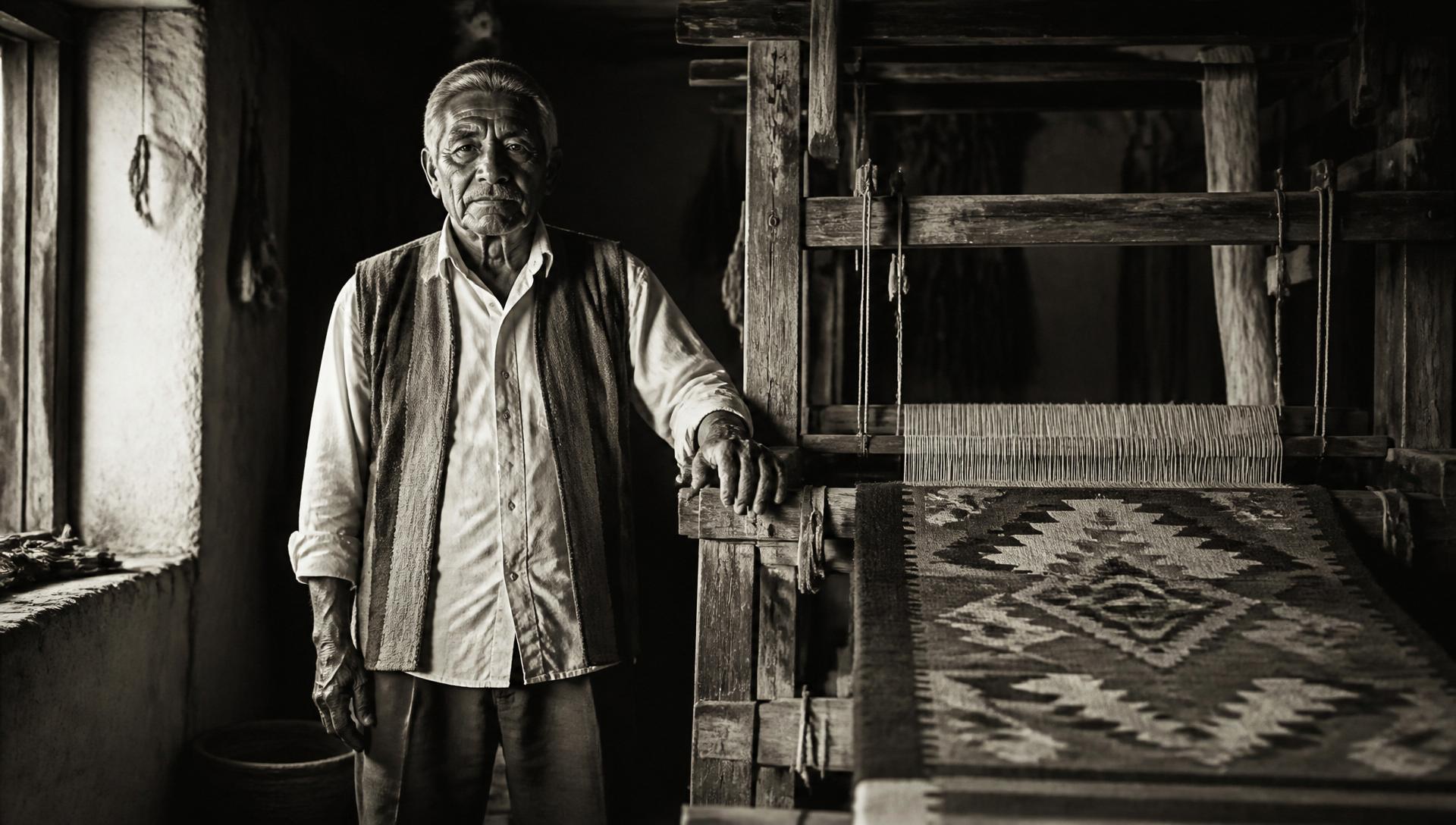
NISAYA works directly with Isaac Vásquez Studio to bring one-of-one textiles from Teotitlán del Valle to collectors and homes across the United States. Every piece is connected to a known maker, a family workshop and generations of weaving knowledge.