

Before a Nisaya rug reaches a home, it belongs first to a place.
That place is Oaxaca—a land of mountains and valleys, ancient cities and living Indigenous communities, cultivated fields and family workshops. Here, beauty is rarely separated from meaning. The objects made by hand carry the memory of where they came from, who made them, and the knowledge required to bring them into being.
For Nisaya, Oaxaca is not simply a point of origin printed on a label. It is the source of the colors, symbols, materials, and values found within every piece.
A Landscape With a Memory
Oaxaca cannot be reduced to a single image. Its character is found in contrasts: sunlit valleys beneath rugged mountains, deep green agave against dry earth, brilliant market colors beside quiet stone walls.
Long before the first thread is placed on a loom, this landscape begins shaping the work. Clay-colored soil suggests warm reds and ochres. Mountain shadows appear in charcoal, gray, and indigo. Flowers introduce flashes of yellow, orange, and pink. The clear Oaxacan light changes the way every color is seen.
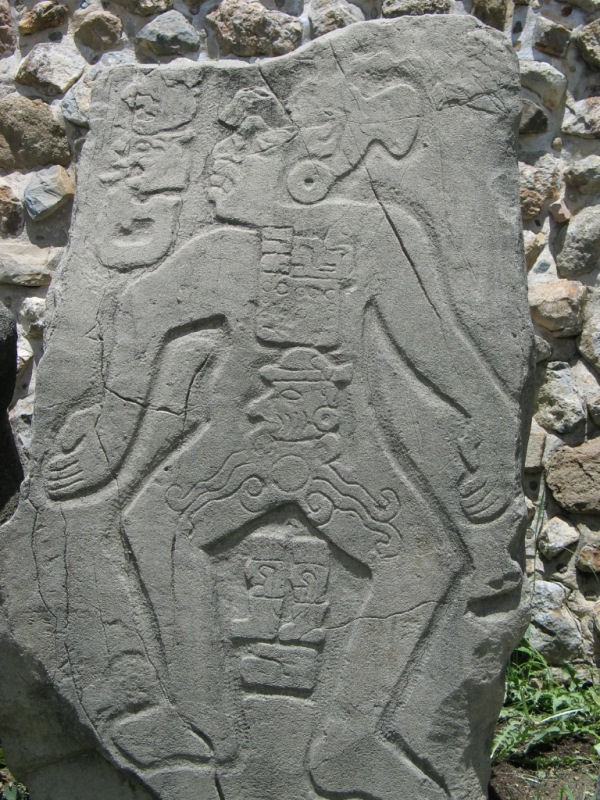
The land also holds an extraordinary cultural memory. Monte Albán, built high above the Central Valleys, was one of the most important cities of the ancient Zapotec world. Its terraces, carved stones, glyphs, and monumental geometry remain part of Oaxaca’s visual language today.
Those forms do not stay confined to archaeological sites. They continue through architecture, ceramics, carving, and weaving—reinterpreted by artists who understand tradition as something living rather than frozen in the past.
To explore that connection more deeply, read From Stone to Loom: How Monte Albán Inspired Isaac Vásquez.
Agave, Mezcal, and the Value of Time
Agave is part of the physical landscape of Oaxaca. Its sculptural leaves rise from the earth in repeating lines and sharp, symmetrical forms. Mezcal is one of the ways generations of Oaxacan producers have transformed that plant through cultivation, fire, patience, and knowledge.
Mezcal does not shape a rug directly, but the two traditions share a way of seeing the world. Neither can be rushed without losing something essential. Both depend on experience passed from one generation to another. Both begin with materials connected to a particular place and become meaningful through the work of human hands.
This respect for time can be felt throughout Oaxaca. It is present in food prepared from inherited recipes, clay formed and fired within village traditions, and wool slowly woven into a finished piece. The value comes not only from the result, but from the process preserved within it.
“Neither mezcal nor a rug can be rushed without losing something essential.”
Color Drawn From the Natural World
In Teotitlán del Valle, color has traditionally been created through a close knowledge of the natural world. Plants, minerals, and insects can produce shades of remarkable depth and variation.
Cochineal—an insect native to the Americas and cultivated on the nopal cactus—can create crimson, rose, magenta, and purple depending on how the dye bath is prepared. Indigo produces blues that range from soft and atmospheric to deep and nearly black. Marigolds, walnut, lichen, and other local materials can contribute gold, brown, green, and earthy neutral tones.
Natural color is never completely mechanical. Water, temperature, mineral content, the preparation of the wool, and the hand of the dyer can all influence the final shade. The small variations are not defects; they are evidence of the material and the process.
That is why natural color feels alive. It contains subtle shifts that reveal themselves differently throughout the day, responding to sunlight, shadow, and the surrounding room.
Teotitlán del Valle: Where Knowledge Lives
A short distance from Oaxaca City lies Teotitlán del Valle, a Zapotec community known around the world for its weaving traditions.
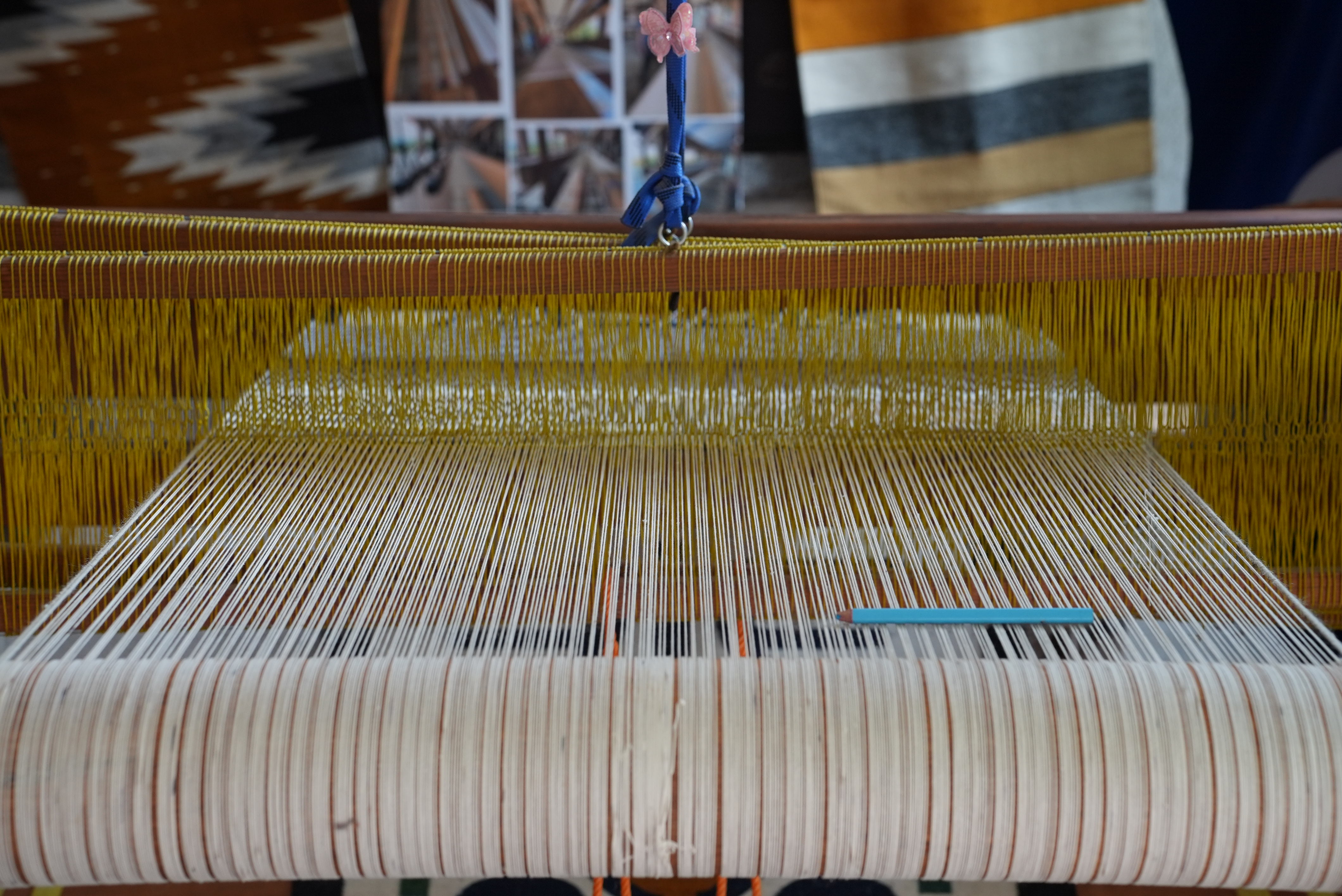
Weaving existed here long before the arrival of the Spanish. Earlier Zapotec makers worked with local plant fibers and backstrap looms. During the colonial period, sheep’s wool and larger treadle looms entered the region. Over generations, local weavers adapted these materials and tools into a practice with its own unmistakable identity.
The knowledge required to make a rug is not learned from instructions alone. It is absorbed by watching: how wool is prepared, how color is judged, how the warp is tensioned, and how a geometric design is built thread by thread. In a family workshop, the loom becomes both a working tool and a place of education.
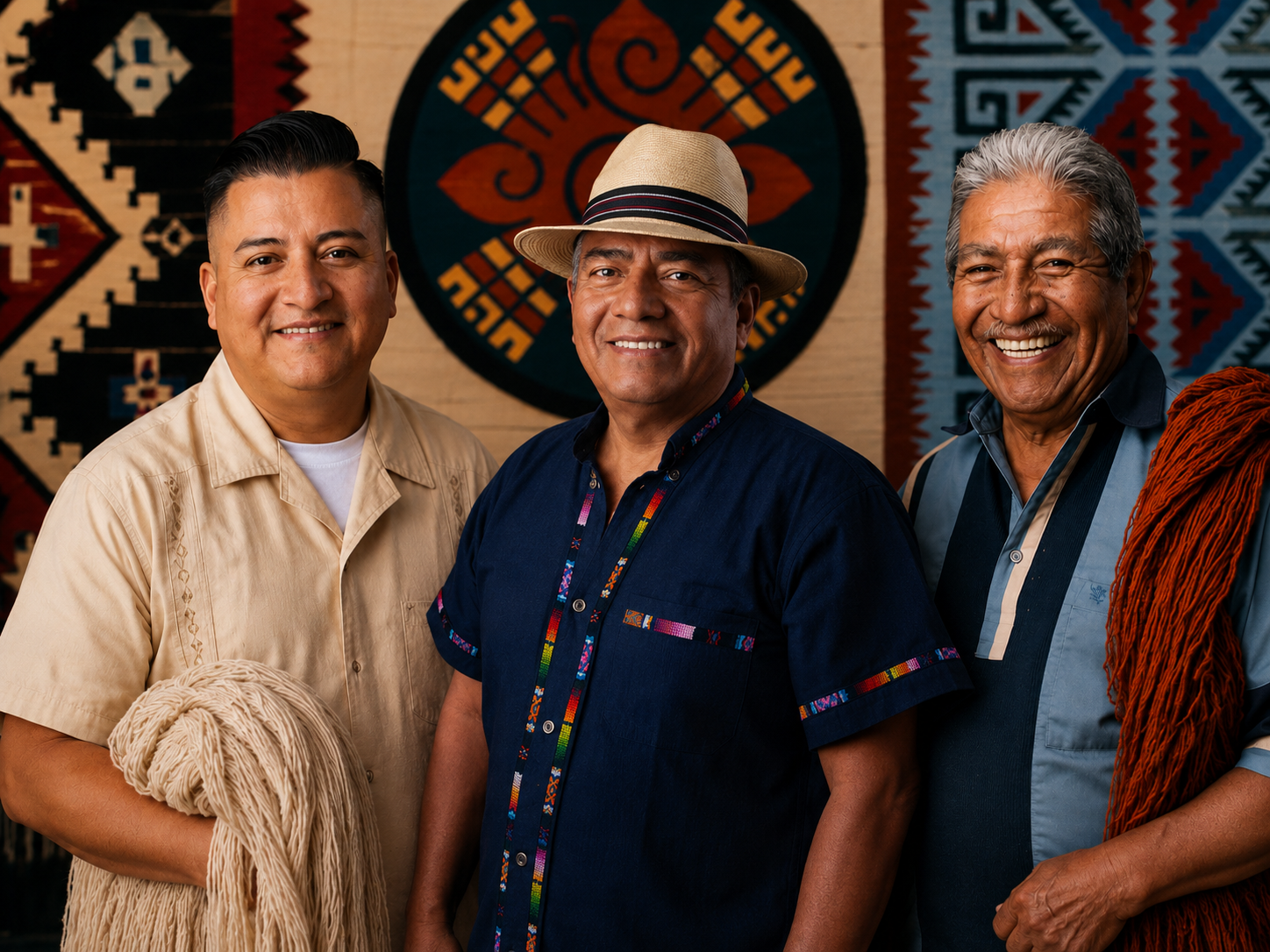
The Vásquez family represents this continuity. Maestro Isaac Vásquez García devoted his life to the loom and helped renew interest in ancestral natural-dye practices. The knowledge he carried was shared across generations. Today, his family continues weaving in Teotitlán del Valle while allowing each maker’s individual perspective to remain visible.
Learn more about the village in Teotitlán del Valle: From Ancient Zapotec Settlement to Rug-Weaving Capital, or meet the weavers behind Nisaya’s collection, or browse authentic Oaxaca rugs.
Ancient Language, Contemporary Expression
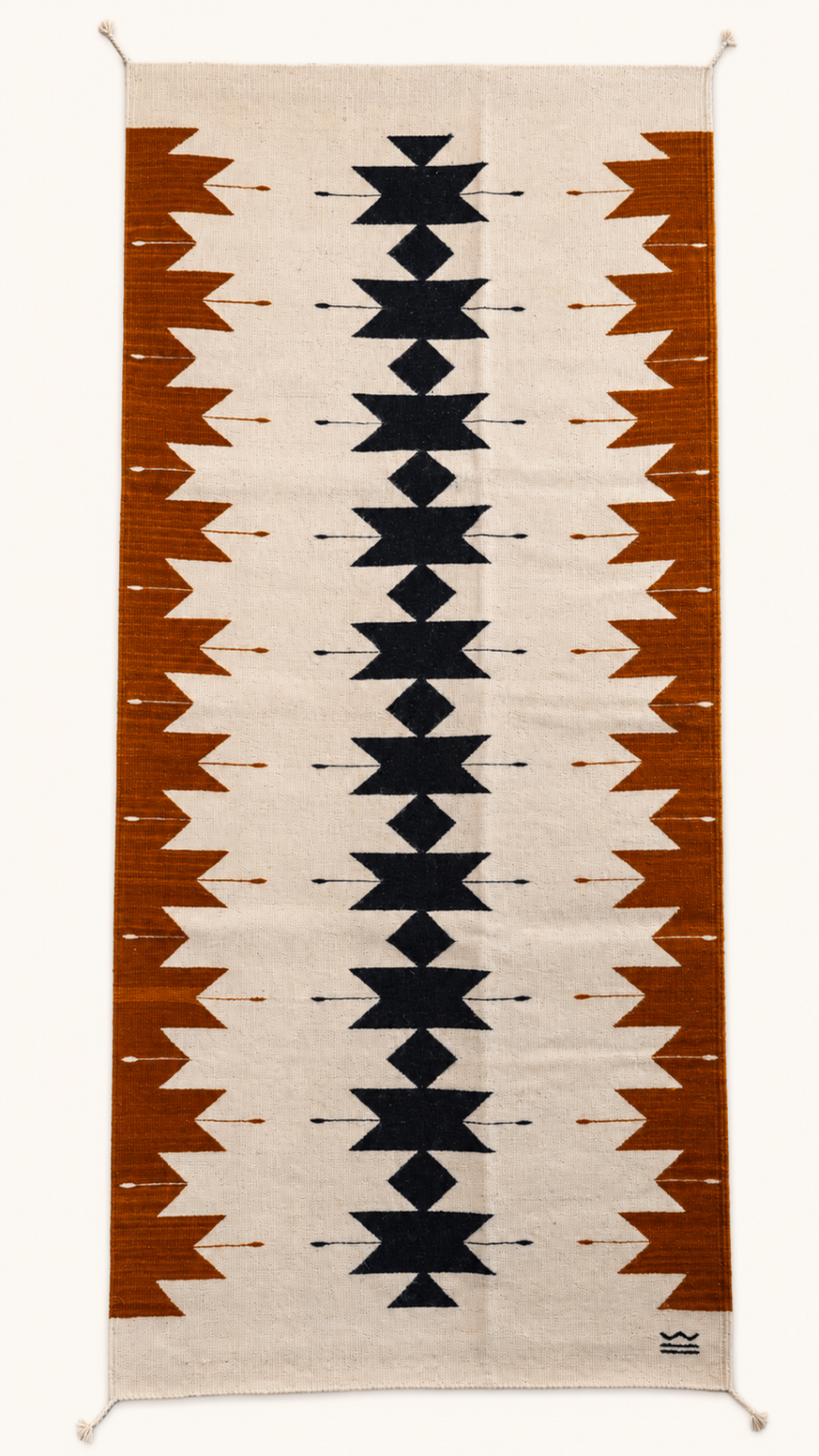
Zapotec weaving is often recognized by its strong geometry: diamonds, stepped forms, directional lines, and repeated borders. Some forms connect to ancient architecture and regional iconography; others emerge through the imagination of the individual artist.
Tradition does not require every generation to repeat the same design. Its strength comes from providing a visual language that can continue evolving.
A weaver may simplify an inherited form, change its scale, interrupt its symmetry, or introduce an unexpected palette. The resulting rug can feel contemporary while remaining unmistakably connected to Oaxaca.
This balance is central to Nisaya. We look for pieces that honor their origin without being treated as artifacts from a distant past. They are living works made for homes today—meant to be walked on, lived with, and passed forward.
Made by a Family, Not a Factory
In a world filled with objects designed for speed and repetition, a handwoven rug asks us to value something different.
Every stage takes time. Wool must be prepared. Colors must be developed. The loom must be dressed. The design must be counted and woven row by row. A single piece can require weeks or months of focused work.
Because the process is guided by hand, no two pieces are perfectly identical. The maker’s decisions remain present in the tension, color, rhythm, and finishing. These details give the rug character and make its provenance meaningful.
Understanding that provenance is also an important part of buying responsibly. Our guide, How to Identify an Authentic Zapotec Rug, explains what to look for and what questions to ask.
Bringing Oaxaca Home
To bring a Nisaya rug into your home is not to claim Oaxaca as your own. It is to welcome a work made there with respect for its maker and an understanding of its origin.
The piece carries more than pattern and color. It carries the patience of the loom, the knowledge of a family, and the visual memory of a landscape where art remains closely connected to daily life.
This is what makes every Nisaya piece one of one. Its uniqueness is not created by scarcity language alone. It comes from the meeting of place, material, tradition, and the person who wove it.
Oaxaca is present in every thread—not as a decorative theme, but as a living origin.